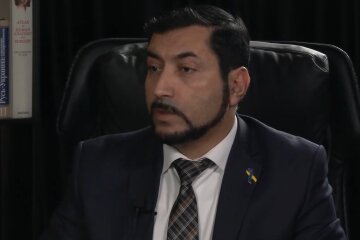
The military operation by Israel and the US against Iran will rely on total aerial dominance and attempts to provoke an internal regime fracture, as a full-scale ground invasion is considered impossible.
As reported by Hvylya, this assessment was shared by Mohammad Farajallah, head of the Middle East Studies analytical center, in an interview on Yuri Romanenko's YouTube channel.
According to the expert, Israeli command anticipates the active phase of the military operation to last up to two months. However, Iran possesses the resources to sustain combat operations for significantly longer, even if its missile stockpiles are depleted. The primary challenge for the allies lies in the fact that classic regime change via military means requires territorial occupation.
"To change the regime, you must have boots on the ground. And Iran's territory—if anyone were to land there—we understand this isn't Vietnam. We are talking about a country with a population of nearly 80 million," Farajallah emphasized.
He added that neither the US nor Israel is prepared for such colossal costs and risks. Therefore, the only realistic path to toppling the Ayatollahs' rule is an internal coup or a special operation to decapitate the leadership. However, the Iranian opposition abroad is currently highly ineffective. The expert noted that representatives of various movements, such as Maryam Rajavi's office in Paris or supporters of the Pahlavi dynasty, operate in a fragmented manner.
"They don't even coordinate among themselves... There is absolutely no coordination between them," the analyst stated, explaining that this plays directly into the hands of official Tehran.
Global Oil Shock: Who Wins from a Hormuz Strait Blockade
A separate topic of discussion concerned the global economic consequences of the conflict. Farajallah warned that even a temporary blockade of the Strait of Hormuz would lead to a massive spike in oil prices, as approximately 20% of the world's oil and LNG exports pass through it.
Such a crisis would primarily hit countries dependent on imports or logistics through the strait, notably China, as well as Arab monarchies.
"Kuwait, Bahrain, and partially Saudi Arabia, the United Arab Emirates, and Qatar will suffer significantly," the expert explained.
Conversely, Moscow stands to be the main beneficiary of the oil crisis.
"Who will come out on top? The Russians will win because they have surplus resources. And the States will win as well," Farajallah noted.
Failure of Chinese and Russian Technology
Analyzing Tehran's military potential, the expert pointed to the failure of defense systems Iran received from its geopolitical partners. According to him, the Western coalition has already established complete air superiority over the region.
"It has become obvious: the weaponry they received from China also proved ineffective. And we know that China helped. It supplied many types of weaponry, there was information about radars and air defense systems," the head of Middle East Studies stressed.
Currently, the main task for Israeli and US aviation is the methodical detection and destruction of ballistic missile launch sites and other strategic infrastructure, which, according to Farajallah, deprives Iran of the ability to launch a symmetric response.
Earlier, we reported that on Saturday, February 28, the US and Israel launched a large-scale military operation against Iran, delivering coordinated strikes on nuclear, military, and government facilities. The campaign has been named "Lion's Roar".