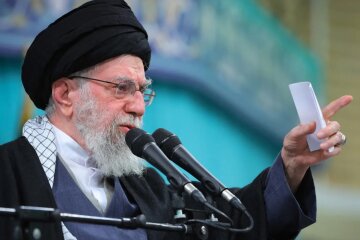
The CIA had been tracking Iran's Supreme Leader Ayatollah Ali Khamenei for months before zeroing in on a critical piece of intelligence: a meeting of top Iranian officials scheduled for Saturday morning at a leadership compound in the heart of Tehran - with Khamenei himself present.
As "Hvylya" reports, citing a New York Times investigation, the agency passed intelligence offering "high fidelity" on the supreme leader's position to Israel, prompting both countries to adjust the timing of their planned attack to exploit the window of opportunity.
The United States and Israel had originally planned to launch strikes at night under the cover of darkness. But the new intelligence about the gathering - which included the offices of the Iranian presidency, the supreme leader and Iran's National Security Council - led to a daytime operation instead.
The intelligence network that pinpointed Khamenei was not new. Last June, during planning for strikes on Iran's nuclear targets, President Trump claimed the U.S. knew where the supreme leader was hiding. According to a former U.S. official, the Saturday operation relied on the same network - but the information had only improved since then.
During last year's 12-day war, the United States learned critical details about how Khamenei and the Islamic Revolutionary Guards Corps communicated and moved while under pressure. Washington used that knowledge to hone its ability to track the supreme leader and predict his movements. The operation began around 6 a.m. Israel time, with fighter jets armed with long-range, highly accurate munitions. Two hours and five minutes later, the missiles struck the Tehran compound.
An Israeli defense official said that despite Iranian preparations for war, Israel managed to achieve "tactical surprise" with its attack. The White House and the CIA declined to comment.