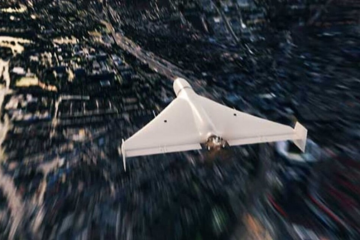
The recent decision to restrict Russian military access to Starlink will have significant consequences across multiple domains of the battlefield. Michael Kofman assessed the likely impact as threefold - affecting strike drones, unmanned ground vehicles, and tactical command and control.
As "Hvylya" reports, Kofman shared his analysis in a special Foreign Affairs podcast episode devoted to the war's fourth anniversary. The full transcript is published on our website.
The immediate impact will be on Russian strike drones that had started using miniaturized Starlink terminals. The second is unmanned ground vehicles - an area where Ukraine has led, using UGVs to offset battlefield losses, with most relying on Starlink as the cheapest communications solution. Russia had begun expanding its own UGV fleet using the same technology. "There are workarounds - Wi-Fi bridges, relays - but Starlink was the easy solution, and it's gone," Kofman noted. The broader evolution of drone warfare technology continues to reshape the battlefield.
But the most consequential impact, he argued, will be on tactical communications and command and control. Russian forces were not initially as dependent on Starlink as Ukrainian ones, having adopted it later. But as reliance grew over two years, so did the dependency. The disruption is compounded by a separate Russian decision to restrict the use of Telegram, pushing troops onto a different platform. "The combination will disrupt Russian command and control," Kofman said.
The analyst cautioned that Russia will adapt - the full effects remain to be seen. But the shift to alternative communications means lower data bandwidth, harder setup, and less portability. "Will it affect latency in how they organize strikes and their situational awareness? Most likely," he said. Meanwhile, Ukraine has been expanding its own strike capabilities deep into Russian territory. "We just don't know the full impact yet."