This assessment comes from an analysis by Bloomberg columnist Javier Blas.
Oil smuggling has long been a highly lucrative trade, generating a daily turnover of $1 billion despite countermeasures from Washington and Brussels. But the tide has turned. According to Blas, the shift is driven not just by tighter sanctions, but by changing market dynamics.
"For the first time, I see cracks in this illicit trade. Millions of barrels of unsold Iranian and Russian oil are accumulating in storage," the author notes.
The primary driver is economic viability. Buyers of sanctioned crude, notably India and Turkey, have found ample alternatives on the legitimate market at reasonable prices. With US WTI crude trading around $63 a barrel, the risks associated with purchasing toxic Russian oil are no longer justifiable.
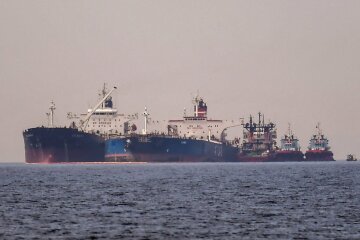
While the exact surplus on the black market is hard to quantify, estimates place it above 100 million barrels. This oil is stuck in onshore tanks and on tankers turned into floating storage. The value of this "dead cargo" is estimated at a minimum of $5 billion.
Data from Kpler illustrates the scale of the problem: the volume of Russian and Iranian oil in floating storage alone has reached 58 million barrels. For comparison, at the start of last year, that figure stood at just 6 million.
India serves as a prime example. New Delhi, formerly purchasing over 2 million barrels of shadow oil daily, is sharply curbing imports from Russia. January purchases dropped 35% compared to mid-last year, falling to 1.3 million barrels. Forecasts for February and March are even grimmer, projecting a slide to 800,000–900,000 barrels.
"Indian refiners are buying non-sanctioned oil from everywhere: the Middle East, West Africa, Brazil, Guyana, the US, and even Argentina," writes Blas, adding that refineries have been surprised by the ease of replacing Russian crude.
Compounding Moscow's troubles is the lifting of sanctions on Venezuelan oil, which has returned approximately 800,000 barrels per day to the legal market.
China remains the key player, purchasing 95% of Iran's exports and 60% of Russia's. Beijing could either snap up the surplus for its strategic reserves, driving down prices on the legal market, or turn it away. In the latter scenario, Russia and Iran would be forced to cut production, inevitably dealing a blow to their war economies.