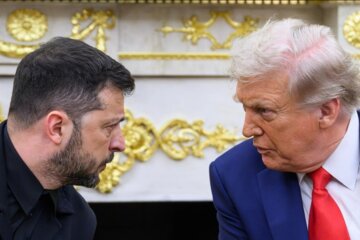
The transformation in how Kyiv handles Washington has been dramatic. After a bruising start to relations with the Trump administration - punctuated by the infamous Oval Office confrontation in February - Ukraine undertook a fundamental shift in its diplomatic approach that yielded tangible results by summer and fall of 2025.
As "Hvylya" reports, Michael Kofman described this evolution in a special Foreign Affairs podcast episode marking the war's fourth anniversary. The full interview transcript is available on our website.
"Ukraine certainly could have done a lot better early on," Kofman acknowledged. But what followed was a steep learning curve, "partly fostered by support from folks in the United States, Britain, and France." The change in tone and substance between the Trump administration and Kyiv was "dramatic - night and day." Public spats on Twitter disappeared. Disagreements were being handled through proper channels. Ukraine ultimately submitted a formal response to the US peace plan, signaling a willingness to engage constructively.
European allies played a critical supporting role, Kofman noted. They were "so actively involved in managing the relationship, constantly showing up - like they did after the Anchorage summit, immediately arriving to smooth things over." This active mitigation ran alongside a genuine change in approach from Kyiv itself. The Munich Security Conference demonstrated how deeply Europeans are now invested in this diplomatic architecture.
The shift was not one-sided. Kofman pointed to a parallel evolution in Washington: "The administration came in thinking Ukraine was a big part of the challenge in getting to a settlement and over time learned that actually Russia is the biggest part of the problem, not Ukraine." Tensions still flare - Trump officials launched a pressure campaign against Zelensky in November, sensing domestic political weakness. But the overall trajectory has moved from confrontation to a functional, if imperfect, working relationship.