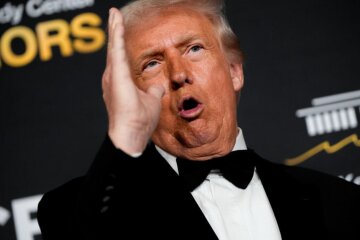
Donald Trump is the most consequential president in modern history - not because of ideology, but because for the first time in a century, a single person is making US foreign policy with virtually no institutional checks, geopolitical analyst Peter Zeihan told the Superpowers podcast.
As "Hvylya" reports, Zeihan explained to former UK Armed Forces Minister James Heappey that the bipartisan foreign policy consensus which shaped America during the Cold War was never adapted for the post-Cold War world. "We've had seven elections in a row where the more populist candidate won," he said - a streak that includes both Trump administrations and Biden's term.
The result is a vacuum. Neither party has a coherent foreign policy vision. Democrats focus on domestic priorities and winning back Rust Belt voters; their trade policy, Zeihan noted, "isn't all that different from Trump's." Republicans are split between a shrinking old guard and an ascendant MAGA faction. Until both parties reconsolidate into new forms - "and they will in time" - there will be no meaningful foreign policy debate in the United States.
"Love Donald Trump or hate him, you can't deny that he is the most consequential president in modern history, because for the first time in a century, foreign policy is made by one person. There's barely even input, much less checks," Zeihan said. As one analyst noted on Hvylya, in this new reality countries like Ukraine must learn to speak the language of deals rather than appealing to values.
The institutional collapse is systematic. Trump gutted the State Department and the National Security Council in his second term, firing "everyone who might have an opinion about anything they'd trained their whole lives to study." The War Powers Act is being ignored. Congress - controlled by a party that has become "a cult of personality" - has declined to challenge the executive on any front. Only the Supreme Court remains as a potential counterweight, Zeihan noted, and the administration "is not interested in - and is in fact opposed to - the very concept of institutions." The Munich Security Conference report described Washington's approach as oscillating "between reassurance, conditionality, and coercion."