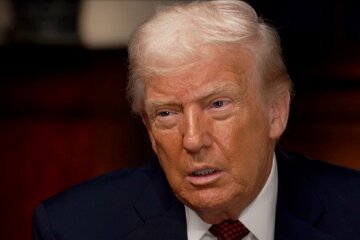
Asked about the possibility of reinstalling Reza Pahlavi - the eldest son of Iran's former shah, who was overthrown in 1979 - President Trump gave a notably unenthusiastic response. Pahlavi "looks like a very nice person," Trump said, but indicated he would prefer "somebody that's there that's currently popular, if there's such a person."
The remark reveals Trump's evolving strategy for post-war Iran, "Hvylya" reports, citing the New York Times. Rather than backing an exile or encouraging a revolution, he appears to favor finding a pragmatic figure already embedded in the existing power structure.
Pahlavi has not lived in Iran since the 1970s. Some Iranians chanted his name during recent protests, but it remains unclear how wide his popular support actually is. His father, Mohammed Reza Pahlavi, was backed by the United States in the 1950s coup that secured his rule for decades. He sold oil to and bought weapons from the United States, was celebrated at the Nixon and Carter White Houses, and maintained good relations with Israel.
Trump initially promoted a vision of popular uprising when he launched the assault. "The hour of your freedom is at hand," he told Iranians in a video on Saturday, urging them to "take over your government, it will be yours to take." Since then, his tone has shifted markedly. "They'll have that opportunity, but honestly that's going to be up to them," he told the New York Times. "They're going to have to make that decision."
The shift from revolution to regime negotiation suggests Trump has concluded that a popular uprising is unlikely to produce a leader Washington can work with. Rosemary Kelanic of Defense Priorities warned there is "a low likelihood that a successor state would be a liberal democracy friendly to the United States." Trump himself acknowledged the risk: "The worst case would be we do this, and then somebody takes over who's as bad as the previous person."
Also read: From Pager Bombs to Khamenei: How October 7 Broke Israel's Taboo on Killing Foreign Leaders