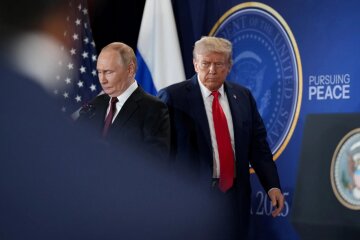
Russian dictator Vladimir Putin has ignored a direct request from U.S. President Donald Trump for a ceasefire, launching one of the most severe strikes on Ukraine's power grid since the start of the war. Instead of the promised "week of silence," Kyiv endured a massive attack amidst -18°C temperatures.
According to Hvylya, citing The Atlantic, the wail of sirens and the roar of air defenses woke the capital’s center around 2:00 a.m. By morning, Kyiv Mayor Vitali Klitschko reported critical consequences: over a thousand apartment buildings were left without electricity and heating during the extreme cold.
The escalation followed a brief glimmer of hope for a temporary lull. Last week, President Trump appealed to Putin to halt attacks for at least a week to allow the severe frost to pass and for negotiations to begin. Initially, it appeared the Kremlin had agreed, but Russia subsequently delivered one of its most brutal blows to Ukraine’s energy system since the invasion began.
None of those interviewed by journalists in Kyiv in recent days expected a different outcome. As the Russian invasion of Ukraine nears its fourth anniversary, Putin’s strategy has shifted toward a blatant violation of the international laws of war, which prohibit the bombing of civilian infrastructure. Ukrainians aptly call this "energy terror," aimed at freezing people into a state of hopelessness to force a surrender.
This goal, like most of Putin's objectives in this war, remains out of reach. President Volodymyr Zelensky continues to insist on peace terms acceptable to his people, including firm security guarantees from the U.S. and its allies to deter any future Russian aggression. Last weekend, as Ukrainian negotiators met with Zelensky to plan this week’s U.S.-mediated talks with Russia in Abu Dhabi, hundreds of people gathered for a daytime rave on the frozen Kyiv Reservoir—dancing, skating, and racing cars.
These images of defiance mask a deepening exhaustion in the capital. "People are truly on the edge," said Yana Markova, a primary school director in Kyiv. Most city schools have suspended classes this winter, and Markova has converted her building into a temporary shelter. The school canteen serves thousands whose apartments are without gas, water, electricity, or heat.
"People react differently," she said over a bowl of chicken soup. "Some direct their anger at the Russians for doing this. Others blame our authorities for failing to protect us."
On January 9, following the year’s first massive strike on Kyiv's power grid, Mayor Klitschko urged residents to leave their homes in search of "alternative sources of electricity and heat." Temperatures that night plummeted well below zero, and the bombings were "the most destructive for the capital’s critical infrastructure," he stated on social media. In many districts, people sought refuge in metro stations, shivering in the cold as they tried to sleep on yoga mats and folding chairs.
However, the metro does not reach all parts of the city. The working-class Desnianskyi district, home to over a quarter of a million people, consists mainly of high-rise buildings. Blackouts disable elevators, trapping some elderly residents in their freezing apartments.
Yesterday evening, roughly eight hours before the latest wave of strikes, journalists met with district head Maksym Bakhmatov on the third floor of an administrative building. On the first floor, in a service center, people sat in heavy coats and wool scarves, some waiting to register complaints about the lack of basic services. One man used the relative warmth of the room to catch a nap.
Bakhmatov sat in his office wearing three layers of clothing, bracing for the next barrage. A former TV producer, he made a name for himself in the same comedy circles as Zelensky, who appointed him to lead the Desnianskyi district in May. The official held little hope for the peace talks initiated by Trump last year, as the Kremlin has shown no willingness to respect any ceasefire calls. "Putin won't stop," Bakhmatov said. "He won't run out of missiles this year or next."
While his anger was primarily directed at the Russians, he also had sharp words for local authorities—a sign of the political fractures deepening as living conditions in Kyiv worsen.
"The city sent us zero generators, zero food," he said.
Federal authorities stepped in to provide emergency aid, setting up heated tents and food stations for people in his district.
After every bomb that hits a nearby power plant, Bakhmatov follows a frantic routine. He receives a middle-of-the-night call warning of imminent blackouts. The water in every high-rise in his district—about 800 buildings—must then be drained from the central heating system before it freezes. If not done within two hours, pipes inside the walls could burst. Repairs to make the buildings habitable again could take years, he noted. "They have the same heating system in Russia," Bakhmatov said. "It was all built in the Soviet Union. Putin knows all its weak points. He knows exactly where to hit."
The unfolding catastrophe has long been evident to those managing Ukraine's energy sector. In mid-November, industry executive Maksym Timchenko traveled to Washington to brief U.S. officials and members of Congress. "This is an absolute disaster," he said during that visit. "This will definitely be the worst winter of the war, and there is no solution other than an energy ceasefire. This is the main message I bring here at all levels."
As the head of DTEK, Ukraine’s largest private energy company, Timchenko observed that Russians were meticulously selecting targets to maximize damage not only to the grid but to Ukraine’s sense of unity. Throughout the fall, missile strikes destroyed substations that transfer electricity from nuclear plants in western Ukraine to the east, where most of the population and heavy industry are concentrated. "They wanted to split us in half," Timchenko explained. "And in the electrical space, they succeeded."
Without high-voltage lines to move power across the country, parts of western Ukraine saw an electricity surplus this winter, while the eastern half endured blackouts of up to 18 hours a day.
As strikes continued into January and temperatures dropped, Zelensky intensified his calls for a partial ceasefire, where both sides would agree not to attack each other's energy infrastructure. Trump backed the proposal last week.
"I personally asked President Putin not to fire on Kyiv and various cities for a week, and he agreed to do that," Trump said on January 29. Ukrainians, he added, almost "didn't believe it, but were very happy about it."
The pause in attacks on Kyiv held through the weekend, while other parts of Ukraine experienced further acts of barbarism. On Sunday afternoon, Russian drones attacked a civilian bus belonging to DTEK carrying miners, killing at least 12 people as they headed home from a shift in the Dnipropetrovsk region. Nevertheless, the weekend saw no missile strikes on Kyiv’s power plants, and Zelensky expressed hope that the reprieve would lay the groundwork for the next round of talks.
Those talks are set to begin today in Abu Dhabi, with Trump envoy Steve Witkoff and son-in-law Jared Kushner mediating. On Saturday, both met in Florida with Kremlin envoy Kirill Dmitriev to discuss terms. "We are encouraged by this meeting, showing that Russia is working to ensure peace in Ukraine," Witkoff later wrote on social media. The Russians, he added, were grateful to Trump for his "critical leadership in seeking a lasting and durable peace."
But that gratitude meant little compared to Putin’s desire to continue Ukrainian suffering. He views the coldest days of winter as tools of war and will use them regardless of any mercy Trump might request. As the sun set over Kyiv today, air sirens began to wail again. People dressed and headed for the shelters, determined to survive the cold for another night.