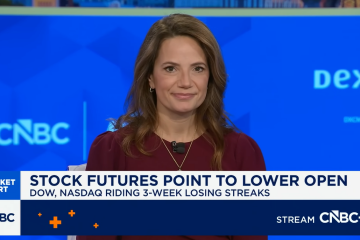
Wall Street is grappling with a peculiar dissonance in early 2026, where decent index performance belies a fragile underbelly of investor anxiety. While the S&P 500 managed to close January in positive territory, technical indicators suggest a market dangerously close to losing its footing.
Katie Stockton, founder of Fairlead Strategies, identified a "tug of war" beneath the surface that has left traders unsettled. The S&P 500 is hovering near a critical support shelf at 6,730. A breach of this level would significantly increase risk, potentially opening the door to a slide toward the 6,130 range.
"This is an environment in which people are on edge," Stockton said.
The technical deterioration is most visible in the cryptocurrency markets, which have decoupled violently from broader equities. Bitcoin has sliced through key support levels, confirming a breakdown from what Stockton defined as a cyclical uptrend. With the asset closing below 89,000, the charts point toward a retreat to 70,000 or even the high 50,000s.
The charts look precarious.
Tom Lee, head of research at Fundstrat, attributed the crypto rout to a sudden capital rotation rather than a fundamental collapse. The industry had already deleveraged in late 2025, leaving it vulnerable when gold and silver prices began to spike at the start of the year.
"That created FOMO, and that was like a vortex sucking all risk appetite towards the precious metals trade," Lee said.
This rush into tangible assets has come at the expense of digital ones. Lee noted that despite the price carnage, fundamental activity on networks like Ethereum remains robust. His technical advisor, Tom DeMark, sees a potential floor forming now that "time and price" have aligned for a bottom, though the capitulation has been deeper than anticipated.
Political maneuvers in Washington are exacerbating the volatility. An administration seemingly focused on "picking winners and losers" ahead of the midterms has injected policy risk into otherwise healthy economic data. Uncertainty surrounding the next Federal Reserve appointment is further clouding the horizon, much like the testing periods seen during the early tenures of Chairs Yellen and Powell.
Stockton sees similar exhaustion in the high-flying AI sector. While the long-term uptrends remain intact, many of these stocks went "parabolic" and now face a necessary consolidation phase. She predicts a corrective period of eight to nine weeks for overextended assets, a timeline that likely applies to both the metals market and AI favorites.
Selection is now everything.
Investors are no longer treating artificial intelligence as a monolith. The market has shifted from buying the "complex" to scrutinizing individual companies, creating massive dispersion in returns.
Despite the headwinds, history offers a sliver of optimism. Lee pointed to the "January Indicator," noting that when stocks rise in the first month of the year—as they did this January—the market finishes higher 80% of the time. But until the current "vortex" of rotation stabilizes, the path forward promises to be bumpy.