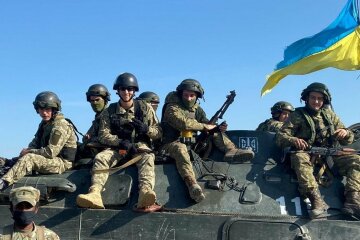
Ukraine must transform into a "steel hedgehog" that is impossible to swallow—boasting a massive army, cutting-edge technology, and its own military production. This post-war security concept was voiced by European Commission President Ursula von der Leyen, who urged Kyiv to become "inedible for current and future aggressors."
According to Aliona Getmanchuk, head of the Ukrainian mission to NATO, there has been a fundamental rethink in Ukraine regarding what security guarantees mean. While the focus was previously on partner obligations, the country's own military and defense industry must now play the key role.
This pivot stems from disillusionment with Western promises. Ukraine was previously burned by U.S. and UK guarantees when it relinquished its nuclear arsenal in 1994—promises that proved hollow. Now, with U.S. President Donald Trump ruling out Ukraine's NATO membership, Kyiv is forced to rely solely on itself.
"The longer the war lasts, the more Ukrainians are convinced they must rely primarily on themselves," Getmanchuk noted.
An Army of 800,000
During peace negotiations, Ukraine is insisting on maintaining an army of 800,000 personnel. This will require colossal effort and expenditure, considering that 2 million Ukrainians currently evade mobilization and 200,000 soldiers have gone AWOL, according to Defense Minister Mykhailo Fedorov.
Building an effective peacetime army requires serious reforms: improved training at all levels, decent pay, digitalization, and the eradication of corruption. "A person must understand they are being prepared for battle and be ready to fight. And commanders must possess leadership qualities—then people won't desert en masse," says Kostiantyn Nemichev, deputy commander of the "Kraken" drone systems regiment.
Drones as the Primary Weapon
Ukraine claims Russia loses about 35,000 personnel monthly, largely due to Ukrainian drones. In 2025, the Ministry of Defense ordered 4.5 million FPV drones worth over 110 billion hryvnias (€2.1 billion)—triple the previous year's amount.
"In drones, electronic warfare, ammunition, and strike systems, production is already measured in hundreds and thousands of units. The key task now is stability from batch to batch and quality control," explains Ihor Fedirko, head of the Ukrainian Defense Industry Council.
Long-Range Missiles
Ukraine is developing its own missiles capable of striking Russian oil refineries, infrastructure, and military facilities deep inside Russian territory. Although Fire Point’s promises to produce 200 Flamingo FP-5 missiles per month (each with a 1,150 kg warhead and a 3,000 km range) have yet to fully materialize, some have already been used against Russian targets.
Ukraine is also working with the UK to develop a tactical ballistic missile with a 500 km range and a 200 kg warhead.
Funding and Production
Last year, Ukrainian defense companies had the capacity to produce $35 billion worth of goods, but the government could only issue $12 billion in contracts due to a lack of funds.
"Up to 60% of capacity remains unused. Without long-term contracts, predictable financing, and protected production sites, mass production cannot be sustained," Fedirko warns.
The EU is providing aid: the €150 billion SAFE arms loan program is open to Ukrainian manufacturers, and a €90 billion loan is planned, two-thirds of which will go toward defense. Additionally, Ukraine plans to purchase up to 150 Swedish Saab JAS-39E Gripen fighters.
Distrust of Guarantees
NATO Secretary General Mark Rutte stated in Kyiv that some European allies are ready to deploy troops to Ukraine following a peace agreement—boots on the ground, planes in the air, and ships in the Black Sea—with the U.S. acting as "backup." However, Russia is already signaling opposition to any security guarantees for Ukraine.
Analyst Timothy Ash poses rhetorical questions: "Will Trump go to war with Russia over Ukraine? Absolutely not. Will Trump impose sanctions on Russia for violating a truce? Extremely unlikely."
This is why the head of the Ukrainian mission to NATO emphasizes that legally binding security agreements and the potential presence of multinational forces are viewed "more as a supplement to Ukraine's own army, rather than a replacement for it."
President Volodymyr Zelensky puts it simply: "With such a neighbor, Ukrainians must be effective masters of their state's defense, so that Ukraine remains forever independent and free from Russia."
Previously, Hvylya reported on Politico's assessment of whether Putin is ready for real peace.