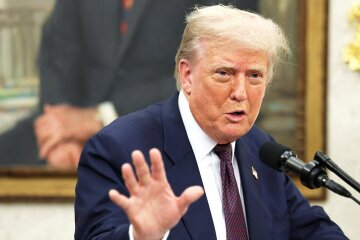
Last week, Donald Trump floated what he called a "friendly takeover" of Cuba - a phrase that marks a departure from traditional U.S. approaches to the island, which have oscillated between military pressure and diplomatic isolation for over six decades. The idea suggests Washington is betting on economic leverage and negotiation rather than force to reshape Cuba's political order.
"Hvylya" reports that according to a Foreign Affairs analysis, Trump is unlikely to turn first to military intervention. Instead, he would attempt to secure political change through negotiation and diplomatic pressure. The administration has already begun backchannel contacts: Secretary of State Marco Rubio has been talking with Raul Castro's 41-year-old grandson, Raul Guillermo Rodriguez Castro.
The potential deal could involve significant concessions from Havana. Cuba's leadership might agree to deeper economic liberalization and a strategic reorientation away from China and Russia. President Diaz-Canel would likely step down, replaced by a figure with Raul Castro's backing who is also acceptable to Washington. The country would remain under single-party rule - but with a fundamentally altered trajectory.
Cuba's own leadership appears to be recalibrating. Last month, Diaz-Canel acknowledged the severity of the crisis: "We have to do very hard, very creative, and very intelligent work to overcome all these obstacles." This stands in contrast to his defiant January statement that imperialism should "calculate what the price of attacking our country would be."
Yet the concept of a "friendly takeover" carries deep risks. As analysts Rut Diamint and Laura Tedesco note, many Cubans would see any accommodation with Washington as an erosion of sovereignty. And any hope the Trump administration might have that such a transformation will be pain-free "is misplaced." Cuba faces a future of longer blackouts, more protests, accelerating emigration, and a transition to a post-revolutionary state that lacks a clear new identity.
Also read: Bombs Don't Build Oppositions: Foreign Affairs Analyst Dismantles Trump's Iran Regime Change Logic