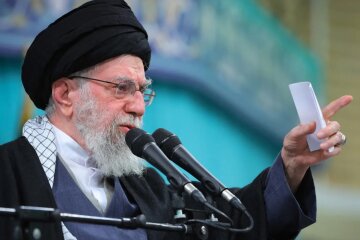
Israel had long maintained an unwritten rule: despite having penetrated the circles of several enemy heads of state - from Egypt's Gamal Abdel Nasser to Syria's Hafez al-Assad - their assassinations were off-limits, even during wartime. The October 7, 2023 cross-border attack by Hamas, which Israel claims was backed by Iran, shattered that taboo.
As the Financial Times reported and "Hvylya" relays, the shift was described by Sima Shine, a former Mossad official with a focus on Iran. She identified two events that led to Saturday's killing of Ayatollah Ali Khamenei. The first was a 2001 directive from Prime Minister Ariel Sharon to Mossad chief Meir Dagan to make Iran a priority. "All the things the Mossad is doing is well and fine," Sharon told Dagan, according to Shine. "What I need is Iran. That's your target."
"And since then, that is the target," Shine said. Israel spent the following two decades sabotaging Iran's nuclear programme, killing its scientists, pushing back its proxies and destroying the military infrastructure of its crucial ally Syria after dictator Bashar al-Assad was ousted.
The second event was October 7. It changed a longstanding calculus that killing foreign leaders - no matter how deeply Israel had penetrated their security - was too risky and too fraught. Failure only adds to a leader's stature, as the CIA's botched attempts to kill Cuba's Fidel Castro demonstrated. Success can set unpredictable chaos in motion.
But Israel's string of intelligence coups - the 2024 assassination of Hamas leader Ismail Haniyeh in Tehran, a $300 million multiyear project to booby-trap thousands of Hizbollah pagers and radios, and the killing of Hizbollah leader Hassan Nasrallah in September 2024 - created its own momentum. "In Hebrew, we say, 'With the food comes the appetite,'" Shine said. "In other words, the more you have, the more you want."
Also read: No Boots on the Ground: Why the US Gamble on Toppling Iran's Regime Might Actually Work