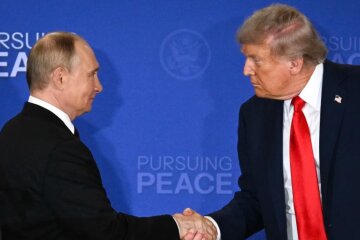
Talks to end the war in Ukraine are being handled by a tight inner circle of Trump loyalists, bypassing professional diplomats, while Moscow has yet to offer any public concessions. Washington Post columnist David Ignatius reported this during a live chat with readers.
According to Ignatius, the negotiation process is being steered by Jared Kushner, Steve Witkoff, Marco Rubio, and JD Vance, with support from National Security Council advisor Andy Baker and Treasury Secretary Bessent. Career diplomats from the State Department have been effectively sidelined.
"This team has essentially dismantled the traditional national security process—for Ukraine and everything else. No deputies' committees to study options, no principals' committees. It’s like a royal court—if you aren’t at the White House or Mar-a-Lago, you might miss everything," the columnist noted.
Putin Digs In
Ignatius observed that Russia has made no visible concessions in the talks. An initial draft agreement, prepared by Kirill Dmitriev and Witkoff, walked back some of the Kremlin's maximalist positions, but Putin has not publicly endorsed it.
"He and Lavrov continue to stick to the positions they held at the start of the war regarding addressing 'root causes'—code for destroying Ukraine's sovereignty, which Kyiv will never accept and should not accept," the journalist explained.
In his assessment, if a deal contains enough concessions to be palatable to Ukraine, Putin will "almost certainly" reject it. Meanwhile, Ignatius sees no sign that Trump is prepared to pressure Putin.
War to Continue
The columnist cites the continuation of hostilities through the cold winter and into 2026 as the most likely scenario. At the same time, he dismissed suggestions of an imminent collapse of the Ukrainian army.
"People who follow the war intelligence closely tell me it is wrong to assume—as Trump seems to believe—that the Ukrainian military is about to fold. They are generally holding the line, despite enormous Russian pressure," Ignatius emphasized.
He added that Europe, backed by US intelligence, is capable of keeping Ukraine in the fight.
Zelensky Playing for Time
Commenting on Kyiv's stance, Ignatius noted that Zelensky has adopted a wait-and-see tactic. In his view, Ukrainians understand the need for "strategic pessimism"—making decisions based not on the hope that talks will succeed, but on the assumption they will fail.
Security Guarantees in Question
The columnist expressed skepticism regarding security guarantees for Ukraine. Ideally, American guarantees would be ratified by Congress, but that will not happen. The next option is guarantees signed by leaders with detailed monitoring mechanisms, described as "Article 5-like."
"Given that Article 5 itself is increasingly questionable—would President Trump really sacrifice Miami to save, say, Vilnius, the capital of Lithuania?—one has to be somewhat skeptical about this whole business," Ignatius remarked.
Long-term Outlook
Despite pessimistic short-term forecasts, the columnist outlined a positive long-term trajectory: a post-war Ukraine becoming an EU member and developing as a prosperous democratic state, while Russia continues to decline, increasingly turning into a vassal of China.
He also noted that Europe will gradually ramp up pressure on Russia, a trend set to continue. "Europe is much stronger than a war-depleted Russia," Ignatius concluded.
The December 15 summit in Berlin marked the culmination of intense diplomatic consultations. Zelensky's talks with Trump special envoys Steve Witkoff and Jared Kushner lasted nearly two hours, with total consultations spanning about eight hours. According to AFP, the American side pressured Ukraine to cede Russian-controlled Donbas territories to Moscow, but the Ukrainian delegation rejected the proposal—the maximum Kyiv would agree to is a "stand where we stand" approach along the line of contact.
US officials stated the parties are "90% there" on a deal and have developed security guarantees for Ukraine "modeled on Article 5 of NATO." Meanwhile, Zelensky confirmed during a joint press conference with Chancellor Merz that positions on territories remain divergent: "We heard the issue of territories under Russian demands from the US. We perceive this as demands from the Russian Federation." Merz proposed that Russia implement a Christmas truce on December 25.
On December 16, Trump declared that a peace settlement is "closer than ever," confirming his readiness to submit a security guarantee agreement to the US Senate for ratification. Regarding territories, he stated: "They've already lost that territory. The territory is lost." In parallel, 12 leaders of the EU and partner nations released a joint statement committing to security guarantees for Ukraine, support for an 800,000-strong army, and EU accession.