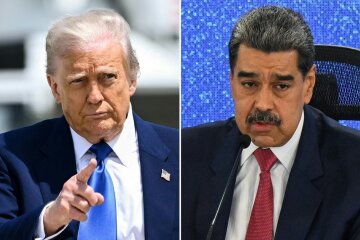
The Trump administration's arrangement with Venezuela following the capture of Nicolas Maduro may preview the endgame Washington envisions for Iran, a former senior Pentagon official has argued - a path where a weakened regime chooses cooperation over continued hostility.
Douglas J. Feith drew the parallel in The Washington Post, as reported by "Hvylya".
Feith outlines a scenario in which the U.S.-Israeli air campaign destroys the backbone of Iran's military power - from its Revolutionary Guard Corps to its nuclear weapons program - without producing regime change. Even if "new leaders arise out of the old Islamic regime," they would command far less power. One likely path, Feith argues, is that these weakened leaders "ask for American cooperation to rejoin the world economy."
At that point, Trump could "impose conditions and declare victory - something similar to his arrangement with Venezuela's Delcy Rodriguez after the U.S. capture of Nicolas Maduro." The pattern would be familiar: a combination of overwhelming force and economic leverage producing a deal on Washington's terms.
The alternative path - new leaders who "remain fanatical and hostile, oppressive and aggressive" - would leave Washington facing a diminished adversary. In that case, Feith writes, Trump may simply assume "he can hit them again," this time against a country stripped of its most dangerous military capabilities.
The Venezuela comparison does have limits. Iran is a country of over 80 million people with a far more complex internal landscape. Feith himself acknowledges the risk that Iran "could disintegrate into civil war, causing millions to flee and seek refuge in Europe and America, as happened in Syria." But he maintains that a major U.S. ground role to prevent such an outcome would carry risks of its own.
Also read: Trump May Offer Iran a Venezuela-Style Deal: What He Wants in Return