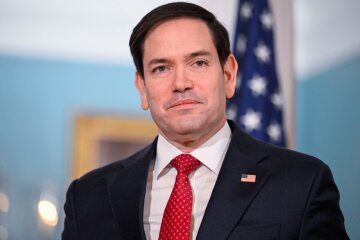
U.S. Secretary of State Marco Rubio has already opened a channel to the Castro family. According to Axios reporting cited by Foreign Affairs, Rubio has been talking with Raul Guillermo Rodriguez Castro - the 41-year-old grandson of former Cuban leader Raul Castro. The contact signals Washington's intent to shape Cuba's political future from within.
According to "Hvylya", an analysis in Foreign Affairs by international relations scholars Rut Diamint and Laura Tedesco outlines several scenarios for Cuba's transition. The most likely: the current leadership accepts some form of deal with Trump, with President Diaz-Canel stepping down and yielding power to someone who has Raul Castro's backing but is also acceptable to Washington.
The challenge is that after nearly seven decades of communist rule, "there is no Cuban leader capable of bringing substantive change to the country," the authors write. Too many inside government remain loyal to the regime, while the opposition is divided and lacks a coherent plan. Most of the regime's political opponents are either abroad or in jail.
Washington's demands could go well beyond a leadership reshuffle. The Trump administration may push for deeper economic liberalization and a strategic reorientation away from China and Russia. Under this scenario, Cuba would likely remain under single-party rule, but with a new face at the top and a fundamentally different foreign policy posture.
The risk of backlash is real. Many Cubans would perceive their government's acquiescence to U.S. demands as "an erosion of Cuban sovereignty, even a reversion to the island's pre-revolutionary status as a U.S. client state," the analysts warn. A rebellion by the military and parts of society cannot be ruled out, making any transition inherently unstable.
Read more: "Rally Around the Flag" Won't Save a Regime That Just Massacred Its Own People