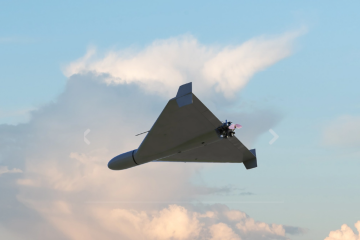
Defense Secretary Pete Hegseth and General Dan Caine, chairman of the Joint Chiefs of Staff, told Congress in a closed-door briefing that the US military has a significant gap in its ability to counter Iranian drone attacks at scale.
As "Hvylya" reports, citing The Atlantic's investigation, a congressional official who attended the briefing said the admission confirmed what many had long suspected. "We have known this for a long time. We don't have, at scale, good defenses against drones," the official said. "So they have to use the defensives they have, which are costly."
The US has relied on a multilayered defense system involving interceptors, combat air patrols, electronic warfare, and short-range missiles. But this architecture was designed to counter threats from distant adversaries like China - not close-range swarms of cheap drones. Even the LUCAS - the Pentagon's own low-cost attack drone with an eight-foot wingspan and a $35,000 price tag - was not designed to take out drones aimed at US forces.
During a Pentagon briefing, Hegseth insisted the military was performing well. "Thousands of Iranian missiles and drones have been intercepted and vaporized, tens of thousands of American and allied lives protected," he said. "We have pushed every counter-UAS system possible forward, sparing no expense or capability." But he also claimed the US media were covering a drone attack that killed six troops at a base in Kuwait "to make the president look bad."
Fears are already circulating inside the Pentagon that the US will burn through its arsenal of advanced air-defense systems given the intensity of the air war. Lockheed Martin produced 620 Patriot interceptors last year and plans to scale up to 2,000 annually - still not enough to replenish stockpiles anytime soon.