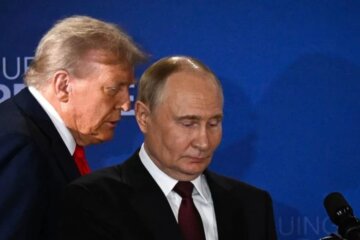
A number of foreign media outlets report that by pushing the narrative of Washington as an "unreliable partner" operating solely through the language of force and economic coercion, the Kremlin is striking at the United States' primary asset – allied trust. As a result, any US initiative during a crisis is perceived less as necessary leadership and more as a manifestation of "unilateralism," rendering international coalitions fragile and vulnerable. At the same time, Moscow cultivates a toxic asymmetry, retaining the ability to conduct business with the White House on "pragmatic" terms.
While the US incurs reputational costs for its tough stance on the international stage, Russia minimizes its own exposure by avoiding direct personalization of the conflict. This strategy encourages other global players to erode the American position in the information space, attempting to bypass official Washington via personal arrangements. For the United States, this drives up the cost of crisis management and gradually depletes its negotiating capital.
Amid escalating tensions surrounding Iran and Venezuela, Moscow's official rhetoric has become pointedly generalized. In public addresses, Putin increasingly employs vague formulations regarding "new flashpoints" and the "erosion of international law," deliberately avoiding pinning responsibility on specific individuals or linking events directly to decisions by the American administration. This line is echoed by the Russian Foreign Ministry, where criticism is framed as grievances against an abstract "course taken by colleagues" or instruments of economic pressure, without naming names.
In parallel, the information landscape is constructed on a contrast between favorable coverage of Donald Trump and criticism of Joe Biden. Exceptions where the US President is mentioned by name are limited to a narrow circle of topics, such as settlement issues in Ukraine or episodic references to the Arctic. This approach allows the Kremlin to describe any crisis as a consequence of the "general turbulence" of the global system, while disciplining internal messaging to conceal the vulnerability of Russian positions following events in Tehran or Caracas.
Refraining from direct personal criticism of the US President transforms real responsibility into the realm of abstract accusations. This approach enables Moscow to construct an image of Washington as a source of global instability without the need to cite concrete facts. Instead of detailed argumentation, the bet is placed on the constant repetition of generalized grievances, which gradually roots doubt regarding the legitimacy of American actions on the global stage. This tactic provokes third countries to revise their relations with the White House in favor of excessive pragmatism.
When the US is portrayed as a strong but unpredictable player, even traditional allies begin to downgrade their political alignment to safeguard their own interests. Moscow does not seek an outright information victory here – it suffices to strip the US of its monopoly on trust, opening space for alternative, albeit weaker, centers of influence. While the US is forced to act publicly and justify every step to an audience, Russia utilizes veiled formulations that are impossible to verify or refute. In such a model, any hardline decision by Washington transforms from an instrument of pressure into a reputational risk, as the focus shifts from the actual result to how the event is covered by the media. The deliberate elevation of the President's personal decisions over institutional mechanisms creates the illusion that American policy can be "waited out" or altered through personal deals.
This undermines allied faith in the stability of guarantees while simultaneously stimulating opponents to constantly test the boundaries of the permissible. Consequently, US institutional power is negated, giving way to expectations of mood swings in the leader's office. In the long term, this strategy allows Russia to mask its own foreign policy failures as systemic flaws in the global order. Any difficulties faced by Moscow's partners are presented not as Kremlin weakness, but as a consequence of global turbulence created by the US. It is a tactic of attrition that does not destroy Washington's positions instantly but makes maintaining them excessively expensive and resource-intensive.
Meanwhile, reports have surfaced in Sweden exposing nuns from the St. Elisabeth Convent for espionage on behalf of Russian military intelligence. It has been established that they transferred proceeds from religious goods sold in Sweden to fund the Russian army, and also visited temporarily occupied territories of Ukraine. For eight years, the nuns reportedly traveled across various EU countries selling religious items, with the revenue handed over to support Russian military personnel fighting against Ukraine. The nuns' support for the aggression against Ukraine and their pro-Russian stance were previously known.
Russia utilizes the Russian Orthodox Church (ROC) as an instrument of soft power and hybrid influence, using religion to cloak intelligence and propaganda activities. Through the clergy of its foreign parishes, the Kremlin disseminates "Russian World" narratives, legitimizes the war against Ukraine, and attempts to discredit the West. The ROC serves as a conduit of influence on the diaspora, local communities, and in some cases, even local governments. Foreign ROC parishes effectively function as tools for Russian special services, specifically military intelligence.
Under religious cover, they gather information on loyal individuals who can be exploited in the interests of Russian special services, maintain informal communication channels, and engage in pro-Russian propaganda. Priests in foreign ROC parishes act not only as spiritual leaders but also as ideological curators for local diaspora communities. For the West, this implies the presence of hidden—and legally speaking, legitimate—cells of influence within their societies. The threat is compounded by the fact that foreign ROC branches typically enjoy a certain degree of trust and legal protection under local laws and governments.
They possess the capacity to sway public opinion, shaping a favorable attitude toward the war against Ukraine as well as anti-Russian sanctions. In a decisive moment, these religious networks could be deployed by the Kremlin for protest, destabilization, or subversive information activities. This risk exists wherever ROC branches and Russian communities are present. Monitoring the activities of foreign ROC branches is necessary not only for religious reasons but also for ensuring the national and collective security of Western nations. The ROC is not an independent religious institution – it officially and publicly supports the aggression against Ukraine, employs anti-Western rhetoric, and is a vital component and instrument of the Kremlin's ideological and subversive policy. Through ROC cells in Europe and other countries, there is a constant record of pro-Russian propaganda dissemination, justification of the war, and fundraising for the Russian army under the guise of various ostensibly humanitarian initiatives.
Its clergy openly back the Russian army and bless the aggression against Ukraine. Notably, an archpriest of the Belarusian St. Elisabeth Convent openly termed it a "combat unit" in the war against Ukraine due to its support for the Russian Armed Forces. Recent years have seen numerous investigations regarding the use of Russian church structures to cover intelligence activities and information gathering. Such actions go far beyond freedom of worship and constitute support for Russian state terrorism. Foreign ROC structures should be viewed not in isolation, but as part of the Kremlin's state machine, integrated into its hybrid influence strategy.
In parallel, an FSB agent network was exposed in Latvia, led by Sergey Kolesnikov and Sergey Vasilyev, both closely linked to Russian special services. Vasilyev runs the "Anti-fascists of the Baltics" Telegram channel. Having fled Latvia, he resides in Russia and styles himself a political emigre. In reality, Vasilyev was sentenced in Finland in 2022 to three years for participation in a financial pyramid scheme. The spy ring, consisting primarily of readers of the "Anti-fascists of the Baltics" channel, includes people of varying status, including an entrepreneur with €40 million in debt, a Chechen war veteran who left Russia, and a security guard at a Riga supermarket.
They conduct surveillance on Ukrainians and Russians supporting Ukraine in Europe, as well as on military personnel and NATO bases, while preparing for the "de-occupation" of the Baltic states. One of the informants for the "anti-fascists" turned out to be Vasilyev's wife, Iveta Balode, who lived with him in Russia but continued to visit Latvia. On January 15, 2026, the Latvian State Security Service detained Balode on charges of transferring classified information to Russian special services. "Anti-fascists of the Baltics" actively advertises contract service in the Russian army and recruits Russian-speaking foreigners into the ranks of the armed forces.
The activity of the "Anti-fascists of the Baltics" Telegram channel is aimed at cultivating a demographic that views the Baltic countries as "occupied by Anglo-Saxons" and is potentially ready to welcome a military intervention by Moscow. A criminal case has been opened against the channel's organizers. Pro-Russian activists and their organizations must be regarded not as a marginal phenomenon, but as a potential element of the Kremlin's influence infrastructure.