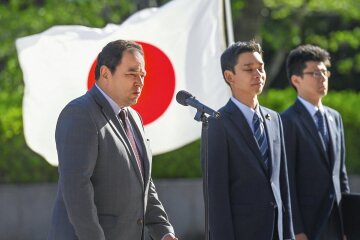
Sergiy Korsunsky, Ukraine's former Ambassador to Japan, challenged the popular thesis by American political scientist George Friedman that "middle powers" such as Japan, Germany, or Canada are destined to remain vassals of superpowers due to an inability to protect their own economies. Speaking on air with political analyst Yuriy Romanenko, the diplomat argued that Japan’s unique financial model proves the opposite.
Korsunsky noted that evaluating Japan solely by GDP figures or growth rates is a mistake. Unlike the United States, where the economy is driven primarily by domestic consumption, the Japanese model is built on a positive trade balance and colossal household savings. "They have 15 trillion on household deposits... the margin of safety in this economy is insane," the diplomat emphasized.
According to Korsunsky, this factor makes Japan resilient even amidst global instability. "Even though the economic situation in Japan is quite complex... the population still puts money in the bank rather than taking it to the stock market, as they do in America," he noted.
Korsunsky pointed to the actions of legendary investor Warren Buffett as the best evidence of Japan's durability. Despite talk of "stagnation," Buffett invested heavily in Japanese corporations. "When Warren Buffett came here two years ago and bought 10% stakes in five major Japanese conglomerates, the whole world gasped... But Buffett said: "You know what, while you're playing roulette... Japan will yield 1% under any circumstances," the former ambassador recounted.
Discussing the security aspect of "middle powers," Korsunsky stressed that Europe can no longer rely solely on the U.S. umbrella and must create its own defense alliance to counter the specific threat posed by Russia. "It is time for Europe to create a military alliance, distinct from NATO, that will ensure European security against one specific enemy... I don't think this would raise questions for anyone; even China would agree to this," the diplomat concluded.