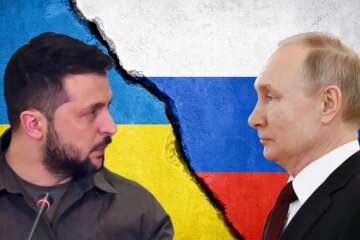
The war in Ukraine is likely to continue for another one to three years, according to high-ranking European officials cited by the Wall Street Journal. Despite loud proclamations of diplomatic breakthroughs, the reality of the peace process looks different: in negotiations to end the fighting, Ukraine and Russia have effectively united around a single common goal—avoiding the anger of U.S. President Donald Trump without appearing to be the party deliberately blocking peace.
Delegations continue to systematically participate in meetings brokered by American officials. The latter, in turn, view the participants' constructive attitude positively and report this to Trump, who considers a potential peace agreement his greatest diplomatic victory.
Recent U.S.-facilitated talks in Geneva ended with the same result as other attempts this year: neither side could point to real shifts. Although the head of the Russian delegation, Vladimir Medinsky, called them "tough but businesslike," and Ukraine's chief negotiator Rustem Umerov characterized the meeting as "substantive," these optimistic diplomatic tropes merely mask a deep stalemate.
U.S. Special Envoy Steve Witkoff claimed "significant progress" but refrained from any specifics. According to many independent observers and even some participants in the process, the negotiations increasingly resemble political theater. Former U.S. Ambassador to NATO Ivo Daalder stated bluntly that these meetings do not bring the end of the war closer but are merely a game where the main goal is to avoid blame for the failure of the American president's initiatives.
The White House head himself has repeatedly emphasized his role as a mediator called to stop the loss of lives, despite the U.S. being across the ocean while the war should be Europe's problem. Last month at the World Economic Forum in Davos, he stated that an agreement between Russia and Ukraine is "pretty close." The American leader expressed conviction that the parties have reached a point where they can strike a deal, adding they would be "stupid" to miss the chance.
Recently, however, the rhetoric has shifted: Trump has returned to accusations against Ukraine, which has been deterring a full-scale Russian invasion for four years. He reproaches Kyiv for its reluctance to agree to a deal that would require ceding territories critical to Ukrainian defense and publicly calls on Ukraine to sit down at the negotiating table sooner.
Senior officials in Kyiv admit that three rounds of trilateral talks this year—two in Abu Dhabi and one in Geneva—were more of a planned performance designed to convince Washington that the problem does not lie with the Ukrainian side. Both Moscow and Kyiv seriously fear that the unpredictable American leader could harm their interests if he suddenly loses patience. Although the Trump administration has already cut the bulk of direct aid to Kyiv, Ukrainian forces continue to receive critical U.S. intelligence support, and European countries provide Ukraine with American weaponry.
For its part, Russia also cannot afford an open conflict with Trump. Its economy is rapidly degrading, and tougher Western sanctions, particularly regarding oil revenues, could prove fatal. Political analyst Abbas Gallyamov emphasizes that this is why Vladimir Putin carefully plays the role of a politician inclined toward a peaceful settlement, as he desperately needs American leverage to pressure Ukraine.
The Ukrainian side openly questions the sincerity of the Kremlin's intentions. President Volodymyr Zelensky sharply criticized the Russian negotiators' attempts to stall for time with historical excursions, calling it a banal delay tactic and stressing that history lectures will not help end the war. This view is shared by the intelligence services of several Western countries, confirming the Russian side's bad faith: according to European officials, Putin is simply trying to use the negotiations to achieve goals he cannot realize on the battlefield. Russia continues to demand not only the total surrender of the Ukrainian Donbas but also a global reshaping of the Ukrainian government, military, and media, which effectively means restoring Moscow's control over the neighboring state. Analysts note that the Kremlin considers its position winning and is ready to stop the war only on the condition of total fulfillment of all its ultimatums.
Despite some progress observed in secondary issues, such as prisoner exchanges or discussing monitoring mechanisms for a potential ceasefire by military departments, a global strategic solution remains elusive. Zelensky categorically refuses to give up the unoccupied part of Donbas, which is a key element of Ukrainian defense with an extensive network of fortified cities. Instead, Ukraine proposes a mutual withdrawal of troops and demands ironclad security guarantees from the U.S. and Europe against new aggression before signing any documents. Russia, meanwhile, rejects both these initiatives and Western plans to deploy European peacekeeping contingents in Ukraine.
The White House had hoped for a quick deal before the U.S. midterm elections in November, but American officials now state that the Trump administration is not exerting additional pressure on the parties and is gradually losing interest in the Ukrainian peace process, shifting its foreign policy focus to nuclear negotiations with Iran and the reconstruction of Gaza.