Ukraine is making a mistake by placing excessive hope on expensive F-16 fighters, which will be unable to operate near the front lines. Instead, the state should focus on developing stratospheric drones and utilizing low-cost attack aircraft, yet leadership incompetence and voter irresponsibility stand in the way.
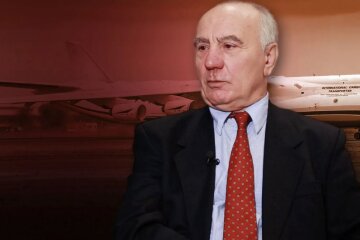
Anatolii Vovnyanko, an aviation designer and one of the creators of the An-225 Mriya, stated this during a broadcast with political scientist and Hvylya editor-in-chief Yuriy Romanenko.
The expert expressed skepticism regarding Ukrainian society's expectations of Western aircraft, emphasizing their vulnerability in an environment saturated with air defense systems.
"Our people thought that once the F-16 appeared, we would defeat the Russians right away. But you can't get close to the front in this plane—it will be shot down immediately. And here, they are hiding them everywhere... Because if a satellite spots a plane, a Shahed or a missile will arrive tomorrow and destroy it," Vovnyanko explained.
Instead of risking machines worth hundreds of millions of dollars, the designer suggests using simpler platforms, such as the L-39 or Super Tucano analogues, to intercept drones.
Vovnyanko proposed developing high-altitude solar-powered drones for reconnaissance to replace AWACS (Airborne Warning and Control System) aircraft.
"What is a stratospheric drone? It is an electric drone operating at an altitude of 20–22 km. It is powered by solar energy during the day to charge its batteries for night use, allowing it to fly for months over a specific area. You can equip it with cameras, locators, and so on to monitor Shaheds over an area up to 200 km deep—at the front or deep in enemy territory. They can be detected from above. Such devices exist today," the aviation designer said.
He emphasized the economic feasibility of such an approach: "The cost is around half a million... even if a fighter jet shoots one down, it is a very small price to pay. It is not the 180 million that an F-16 fighter costs."