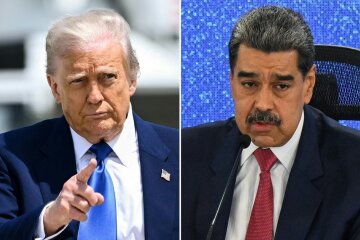
Before the 2003 Iraq invasion, Colin Powell famously warned President George W. Bush: "You break it, you own it." Two decades later, Donald Trump has made clear he intends to break Iran - and own nothing that follows. Richard Fontaine, CEO of the Center for a New American Security, argues in Foreign Affairs that this represents the final nail in the coffin of post-Cold War American military doctrine.
As reported by "Hvylya", Fontaine's analysis in Foreign Affairs notes that Trump has "already telegraphed that the United States will not own the aftermath" of the Iran operation. If the Islamic Republic collapses, "the Iranian people will need to pick up the pieces." If it survives, "Washington will wrap up the fight and move on to other priorities."
This posture is consistent with every Trump military action. The 2017 Syria strikes did not come with a plan for post-Assad governance. The Houthi campaign ended with a deal, not a transformation of Yemen. The Venezuela invasion removed Maduro but left his regime in place, with no American commitment to rebuilding. In each case, the administration treated military action as a discrete event rather than the beginning of a long-term obligation.
The Powell Doctrine emerged precisely because the United States learned - in Vietnam, and then again in Afghanistan and Iraq - that winning the war was only the first step. The harder part was building stable institutions afterward. The catastrophic post-invasion failures in Baghdad and Kabul cemented the lesson: destroying a regime without a plan for what comes next creates chaos.
Trump has explicitly rejected this logic. His approach favors "short, sharp military actions" with no commitment to nation-building, reconstruction, or prolonged military presence. If the price of regime change in Iran requires large-scale ground forces, Fontaine writes, "Trump has made clear through past action that the United States will not pay it. It will instead settle for less."
Fontaine warns this calculus creates a dangerous gap. The range of post-regime scenarios in Iran - "from an IRGC-led military dictatorship to a descent into domestic chaos" - is far wider than the possibility of a smooth democratic transition. By refusing to plan for the aftermath, the United States risks creating a vacuum that could prove worse than the regime it destroyed. The approach, Fontaine concludes, "does not pave the way for long-term peace but postpones conflict to another day."
Also read: "Rally Around the Flag" Won't Save a Regime That Just Massacred Its Own People