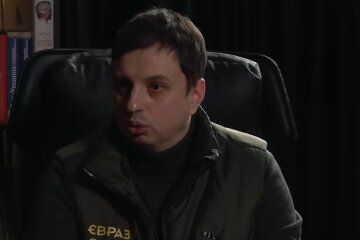
Dmytro Ivanov, co-founder of the volunteer movement "Dobrobat," appeared on air with political analyst and Hvylya editor-in-chief Yuriy Romanenko to deliver a scathing critique of the state's readiness for the heating season and discuss the deployment of autonomous heating points in Kyiv.
Commenting on the host's suggestion that the state "slept through" preparations for winter, Ivanov corrected the phrasing to be more categorical.
"I understand what you wanted to say: not slept through, but blew it... We needed to think about [winter] a year and a half, two years, or a year ago—to prepare. Not to heroically overcome it now. We have snow, winter comes unexpectedly, and we always heroically overcome it," Ivanov stated.
At the same time, he noted that the situation varies by region, placing responsibility on local authorities as well. According to Ivanov, some cities, such as Ternopil or Mykolaiv, prepared better by creating "energy islands," while others, like Chernihiv, still maintain bans on autonomous solutions. "Does the Ministry of Energy influence the fact that individual heating is banned in Chernihiv, but not in Ternopil?" he asked.
In response to the crisis, volunteers partnered with Estonian allies—NGO Mondo and the Estonian government—to deploy large heating hubs in Kyiv's Troieshchyna and Holosiivskyi districts. These are not mere tents, but complexes equipped with heating, electricity, internet access, and zones for children.
"It is bright and very comfortable here... children make origami, and psychologists are present... It is warm, comfortable, and all equipment is certified... One of our first rules is safe reconstruction... safety comes first," the volunteer emphasized.
In addition to warmth, the points provide food for thousands of Kyiv residents.
"On average, 10,000 people [per day]. Some is prepared at School 320, some in food trucks," Ivanov reported, adding that the main principle of their work is civic engagement. "Our slogan is beautiful: 'Donate your time.' We don't ask people to donate money... we ask everyone to donate their time."
Ivanov is convinced that the only way to withstand strikes on the energy sector is maximum decentralization ("many streams"). In his view, restoring old large-scale facilities without creating alternatives is a mistaken path.
"We need to diversify risks and create more autonomy for houses and hospitals... If there is thermal and electrical generation in the thousands, hundreds of times more [locations], it requires more resources to destroy it. It becomes much more expensive [for the enemy]," the expert explained.
He urged authorities to immediately transition to an "energy island" strategy and install cogeneration units, noting that "winter is not over" and the threat of blackouts will remain relevant in the coming years.