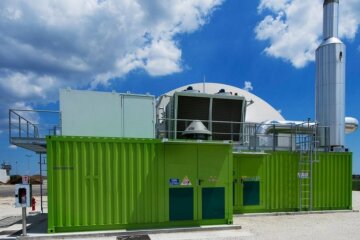
Western assistance intended to save Ukrainian cities from blackouts is currently idling in warehouses or becoming entangled in criminal investigations due to local bureaucratic chaos. While some communities have moved quickly to launch small-scale power generation, others have spent years failing to resolve paperwork issues.
According to energy and utility expert Oleg Popenko, analyzing the current state of Ukraine's power system for Hvylya, the situation highlights a critical failure in local governance. Popenko noted that in the second half of 2023, USAID provided Ukrainian communities with dozens of gas-piston units—mini-power plants capable of supplying heat and light to critical infrastructure. Where local authorities acted efficiently, such as in Starokostiantyniv, the equipment was operational by that same winter.
However, the overall statistics are grim. By mid-2024, only three of the more than 90 delivered units had been installed. In Oleksandriya, for instance, four units remain offline. Popenko singled out the Kyiv region as the "apogee of local government failure," where bureaucracy reached the point of absurdity: one unit was transferred to the balance sheet of one municipal enterprise, funds for its installation were allocated to a second, and the land for construction was granted to a third. Consequently, instead of generating electricity, officials ended up facing criminal prosecutions.
"The prosecutor's office steps in and says, 'Goodbye, you're going to jail. You have no right to spend money there, and you have no right to spend anything without the land rights.' Meanwhile, the man in charge of the unit is sitting there not knowing what to do with it. This mess raises real questions about what local authorities have actually achieved," Popenko said.
The situation in the capital is equally concerning. According to the expert, Kyiv has effectively failed its program to create an energy "island." City authorities promised to commission 125 MW of backup generation based on gas-piston units by the end of 2025—a volume sufficient to cover approximately 10% of the city's peak winter consumption. However, deadlines have been missed, and it remains unclear when the capital will receive the promised capacity. "Kyiv has blown the connection program," the expert concluded.