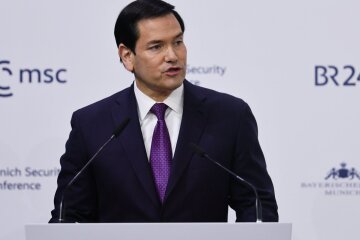
U.S. Secretary of State Marco Rubio delivered a series of pointed remarks at the Munich Security Conference, expressing skepticism over the Kremlin's readiness for genuine negotiations and calling on Europe to take responsibility for its own defense, while emphasizing the West's shared civilizational heritage.
This was reported by Hvylya, citing the politician's speech and his comments to Bloomberg.
Rubio noted that Washington and Western intelligence agencies still lack certainty as to whether Vladimir Putin is truly interested in ending the conflict. Despite public statements from Russian officials, the U.S. suspects that Moscow continues to pursue its maximalist objectives.
"We do not know if the Russians are serious about ending the war. They say they are," the Secretary of State said.
At the same time, he stressed that the aggressor can no longer achieve its original goals, as it is losing 7,000 to 8,000 troops per week on the front lines. The U.S. objective remains unchanged: to reach an agreement "that Ukraine can live with and that Russia can accept."
A significant portion of Rubio's speech was dedicated to relations with the Old World. He conveyed President Trump's demand for "seriousness and reciprocity" from European partners. According to the Secretary of State, Europe must be able to defend itself against regional threats rather than relying exclusively on the American security umbrella.
"We need allies who can defend themselves so that no adversary feels inclined to challenge our collective strength," he emphasized.
Rubio also made an emotional appeal regarding shared history, referencing Christian faith and the "sacred heritage" that binds the U.S. and Europe.
"For us Americans, our home may be in the Western Hemisphere, but we will always be children of Europe," he stated, adding that America does not seek a rupture but rather a revival of "old friendships."
Rubio also addressed the crisis facing international institutions. He criticized the UN for its helplessness in resolving modern conflicts, particularly in Gaza and Ukraine. In his view, the organization lacks answers to pressing questions, and it is U.S. leadership that has managed to bring parties to the table in pursuit of peace.