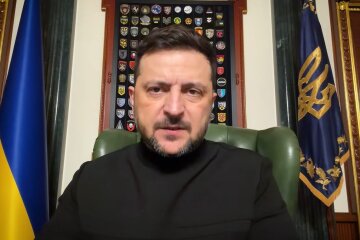
Ukrainian President Volodymyr Zelensky has accepted a US offer to host a new round of negotiations next week aimed at ending the war with Russia, with discussions expected to center on the contentious issue of territory.
The upcoming talks are tentatively scheduled for Tuesday or Wednesday, Zelensky told Bloomberg News, noting that it remains unclear whether Russia will agree to a meeting in the United States. The agenda includes a US proposal to establish a free economic zone as a buffer in the eastern Donbas region—an option the Ukrainian leader said is viewed with skepticism by both warring parties.
"None of the sides is keen on the idea of the free economic zone — neither the Russians, nor us," Zelensky said in a phone interview from Kyiv on Tuesday, though he did not rule the option out entirely. "We have different views on it. And agreements were as follows — let’s come back with the vision of what it may look like for the next meeting."
Envoys for President Donald Trump are intensifying efforts to broker an end to Russia's full-scale invasion as the conflict nears its fifth year. Territorial control remains the primary sticking point.
Zelensky described a previous round of talks held earlier this month in Abu Dhabi between Russian, Ukrainian, and American officials as constructive. He added that the war could conclude within months if negotiations proceed in good faith.
regarding the Donbas—where the Kremlin insists on controlling the entire region, including areas it has failed to seize militarily—Kyiv favors keeping troops in place along the current front line. Zelensky emphasized that the US must clarify its position on the governance of any proposed buffer zone.
"If it is our territory — and it is our territory — then the country whose territory it is should govern it," Zelensky stated.
The Ukrainian president has previously noted that the US midterm elections in November are pressuring the Trump administration to secure a peace deal. Last week, he indicated that Trump’s team has proposed finalizing all necessary negotiations to end the fighting by June.
According to Zelensky, the US administration seeks to sign all related documents simultaneously. He stressed that any peace proposal would require ratification by Ukraine, either through a parliamentary vote or a national referendum.
Zelensky has repeatedly stated his intention to call a referendum on any peace deal once fighting halts. David Arakhamiya, the head of Zelensky’s party in parliament, told reporters last month that Kyiv aims to finish drafting a referendum law by the end of February, with the plebiscite likely to be held alongside a presidential vote.
"For the time being we are also talking about a sequencing plan of all our actions, including signing of documents," Zelensky said. "I think that after our next meeting, there should be an understanding."
Recent talks in the United Arab Emirates focused on the mechanics of a ceasefire and US monitoring protocols, according to Zelensky. However, negotiators were unable to finalize details without higher-level political decisions.
As parties scrutinize the wording of the pending agreement, Zelensky noted that discussions made clear any truce would require monitoring involving US participation.
"Russians have one wording, we have another one, the Americans have the third one," he said. "There is an understanding that there will be monitoring, but there is also an understanding more work is needed on wording and details."
The next round of negotiations, which will include bilateral talks with Washington, may address postwar planning and economic recovery. Zelensky said Kyiv will dispatch Economy Minister Oleksii Sobolev to join the delegation to discuss a so-called prosperity package with the US.
Despite tentative progress, Zelensky warned that optimism should not obscure the challenges Ukraine faces regarding recovery funding and maintaining military deterrence against future Russian aggression. Without clear sources of financing, he cautioned, an economic shock could be imminent, citing the billions of dollars required for reconstruction and social spending.
This would require a clear funding mechanism with European participation, as potential financing from frozen Russian central bank assets would not cover long-term needs, he added.
Zelensky also highlighted that recent Russian air strikes on energy infrastructure have destroyed up to 10 gigawatts of Ukraine’s generating capacity, resulting in daily power deficits of five to six gigawatts during peak hours. Some facilities, he noted, will not be repaired before the next heating season.