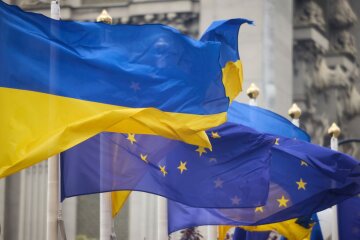
During a working dinner on Wednesday evening, ambassadors from EU member states, meeting in the COREPER II format, delivered a clear message to the European Commission: there will be no support for an accelerated format for Ukraine's accession to the European Union.
According to Politico, ambassadors informed Ursula von der Leyen’s chief of staff that member states would not accept the Commission's controversial "reverse enlargement" proposal. This decision effectively ends the "membership first, integration later" model that the European Commission had been promoting in hopes of admitting Ukraine to the EU by 2027.
The move was not unexpected, as several key European capitals had already taken a firm stance on the issue. The essence of "reverse enlargement" was to grant membership first and subsequently expand rights and privileges in stages. This was just one of four concepts circulated by the Commission ahead of the dinner.
One diplomat described the atmosphere of the meeting as "business as usual," but acknowledged that the signal from national capitals was blunt. "That’s it. Reverse enlargement is going nowhere," another diplomat stated, adding that the Commission would have to rethink the idea. Four other EU diplomats also categorically rejected "reverse enlargement" as a viable strategy—not just for Ukraine, but for any candidate country.
"They created false hopes," said one senior diplomat. "Now we need to fix this and tell them: in reality, this reverse enlargement was dead on arrival."
The draft conclusions for the upcoming European Council summit on March 19 mention both the dispute over loans for Ukraine and the enlargement discussion. Leaders are expected to endorse the traditional EU approach based on an assessment of each candidate country's actual achievements. This means the Commission’s hopes for a rapid accession for Ukraine are officially "dead," according to Politico’s sources.
"We want to anchor Ukraine to the EU, but we cannot break our procedures and abandon the merit-based system," one diplomat emphasized. "We need to find a realistic way forward."
On the day of the ambassadors' meeting, EU Enlargement Commissioner Marta Kos spoke at a discussion in Berlin, defending the need for "new thinking." She argued that the current accession model was established over 40 years ago—during the era of Spain and Portugal’s entry—and was "designed for a stable, rules-based world that no longer exists."
A senior EU official admitted to Politico that the topic of enlargement moved to the forefront largely "because of the noise created by wild ideas." Renew Europe MEP Nathalie Loiseau also warned that such an approach risks "confusion in member states and disappointment in candidate countries."
Separately, the draft summit conclusions note that leaders "welcome the adoption of the loan for Ukraine for 2026-2027" and expect the first payments. Meanwhile, a dispute over a pipeline continues, with Hungary linking its veto of the €90 billion loan to the issue. According to Politico, several member states have privately asked Ukraine to allow inspectors to assess damage to the pipeline, but have been refused.
"Ukraine insists it needs time to assess the extent of the damage," several EU diplomats told the publication.