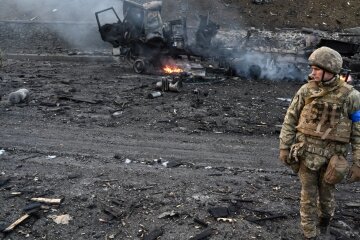
The war in Ukraine has far more in common with the Korean War of 1950-1953 than with World War II - a parallel that carries an important lesson about how devastating regional conflicts can remain regional even when great powers are involved.
Writing in Foreign Policy, Jo Inge Bekkevold, a senior China fellow at the Norwegian Institute for Defence Studies, pushed back against the widespread tendency to frame the Ukraine conflict in World War II terms. As "Hvylya" reports, Bekkevold argued that the Russia-Ukraine war "remains regional" in character, much like the Korean War of 1950-1953.
The Korean War parallel is instructive precisely because that conflict was, in some respects, even more dangerous than what is unfolding in Ukraine today. In Korea, one of the two Cold War superpowers - the United States - was a direct combatant, and U.S. forces fought against the Chinese People's Liberation Army in open battle. Yet even with that level of great-power involvement, the Korean War "did not have any systemic effects" on the global balance of power, Bekkevold noted.
Ukraine's war shares the regional profile. Military operations take place only in Ukraine and Russia. There is no direct military confrontation between the United States and China - the two major powers in the current system. North Korea has deployed soldiers to fight alongside Russia, and the outcome will affect China's reach into Europe, but these factors do not transform the conflict into a global one.
Bekkevold acknowledged that Ukraine is engaged in "a total war against Russia" with stakes amounting to nothing less than the country's survival as a nation. The war has enormous consequences for European security, U.S. strategy, and the global economy. But consequences and classification are different things - and conflating a devastating regional war with a world war distorts the policy choices available to those trying to end it.
Previously: 90 Senators Back Russia Sanctions but the Vote Stalls: Petraeus Pushes for Action.