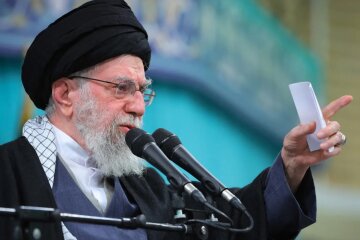
Iran has selected a new Supreme Leader following the killing of Ayatollah Ali Khamenei in the initial US-Israeli strikes - and the choice has disappointed those hoping for a break from hardline rule. The position has gone to Mojtaba Khamenei, the previous leader's own son, a figure the United States sanctioned back in 2019.
The selection is "very disappointing," Gen. David Petraeus, former CIA director and former commander of US Central Command, said in a CSIS discussion covered by "Hvylya". Iran will get "another hardline ideological cleric" rather than any softening of the regime's posture, he said.
The succession underscores the resilience of Iran's ruling apparatus even after the decapitation strike that killed the senior Khamenei and other regime leaders. Petraeus acknowledged the initial strikes were "very impressive" in targeting regime leadership, but the system has regenerated its top position from within the same family and the same ideological mold.
The broader picture remains bleak for those hoping internal change might follow the military campaign. Petraeus said regime protection forces number roughly one million before reserves are mobilized: over 150,000 in the Islamic Revolutionary Guards Corps, more than 200,000 Basij militia, 400,000 in the regular military, 250,000 National Police, and 25,000 from the Ministry of Intelligence. These forces "have shown a willingness to kill their own citizens - tens of thousands of them in the January demonstrations alone," Petraeus said.
With the new Supreme Leader coming from within the regime's innermost circle, the prospect of a political opening from above has effectively vanished. And organized opposition from below does not exist - Petraeus said there is "no leader, no headquarters, no chain of command, no logistics, not even any weapons" among the demonstrators who took to the streets in massive numbers.
Also read: Only 10-20% Support the Regime: Iranian Studies Director Exposes the Real Balance of Power in Iran