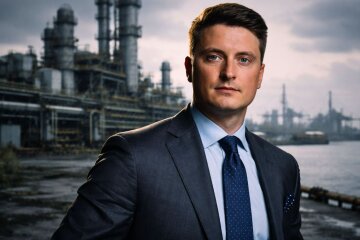
Managing partner of Agro-Gas Trading Alexander Gorbunenko discussed attempts to privatize the Odesa Port Plant, which has been idle since September 2021. In an interview with political analyst Yuriy Romanenko, the businessman explained why launching OPP could save Ukraine up to $500 million annually, what obstacles the state creates for potential investors, and how his company faces persecution through criminal cases and media attacks. The conversation covered topics from the fertilizer market and tolling schemes to systemic problems with privatization in Ukraine during wartime.
Yuriy Romanenko: Friends, hello! Surfers and slackers, beloved deviants, our viewers watching my channel, welcome to a new broadcast. And today we have an interesting guest with whom we've been trying to do a broadcast for several months now. This is Alexander Gorbunenko, managing partner of Agro-Gas Trading. There is such a company. For most viewers, it probably means nothing, but nevertheless, this company is a very serious player fighting for the Odesa Port Plant.
The Odesa Port Plant has been constantly in the news throughout Ukraine's independence. There has been constant struggle over it, various oligarchs fought for it, there was all sorts of commotion - to privatize or not to privatize. The question arises: why such interest? Why does this facility remain of interest even during wartime, since privatization during war seems rather strange, but on the other hand, it's obvious that many would like to gain control of this asset, since in the long term the Odesa Port Plant is a serious player.
It used to be a serious player. I looked up information and the first search results show that OPP played a significant role in the global market for nitrogen and phosphate fertilizers. And actually, I know that right now, during the war, several countries are showing enormous interest, particularly Saudi Arabia, showing enormous interest in the Odesa Port Plant. And regardless of whether hostilities are ongoing or when the war ends, this interest suggests thoughts that obviously - if the Saudis understand how to integrate this asset into various chains, then it's quite obvious that other players have such interest as well.
And Alexander's company, where he is managing partner, also shows this interest and is trying to participate in the struggle to gain control of this facility. And why, what are the motives, how does privatization proceed in general in the difficult conditions Ukraine finds itself in today, and what conditions exist there - we'll talk about this with him today. Good afternoon.
Alexander Gorbunenko: Hello, Yuriy, hello, dear audience. Indeed, the topic of the Odesa Port Plant was relevant, is relevant, and will be relevant, at minimum because this enterprise's activities are connected with fertilizer production. Fertilizer is an integral part of food security both for our country and for the entire world.
In its time, OPP produced about 10% of the world volume of carbamide sold on the market. Today this production enterprise in its theoretical concept remains a flagship of Ukraine's industry, but this enterprise is idle. And the topic of possible prospects, possible interest from major players both in the Mediterranean basin and the Middle East, is primarily connected with the fact that this enterprise has colossal potential. Regardless of the fact that technologically this enterprise was designed and built about 40 years ago.
Yuriy Romanenko: Tell me, what is today's market for nitrogen fertilizers, phosphate fertilizers? What kind of market is this? What players are there? What is its volume? If you say that OPP occupied 10% of the market, then accordingly, what share does Ukraine have? At least approximately. Is there such understanding?
Alexander Gorbunenko: If we're talking about OPP's 10% market share, we're talking about the late 90s. Today this share has significantly decreased due to the fact that a huge number of players have appeared. Primarily in those geographies where there is access to cheap gas that is extracted in those territories. And in general, the global market today consists on the consumption side - the largest consumer is India, since India is one of the most densely populated states in the world in terms of number of people.
I would still emphasize what's happening today in the Ukrainian market. And here, of course, with the presence of such a giant as OPP, we have a gigantic problem connected with the fact that this asset is idle. That is, there is no production today. And this situation has continued since September 2021.
Yuriy Romanenko: So during the war it hasn't been operating?
Alexander Gorbunenko: It hasn't been operating since September 2021 and throughout the full-scale invasion the enterprise hasn't been working. There were several attempts to launch it. These attempts, unfortunately, were not successful. But I would like to draw attention to the fact that in today's difficult conditions, from any point of view, in the context of the fertilizer market we depend on imports.
And the market is developing in such a way that with the presence of substantial production capacity, we're not realizing the potential that's embedded. Conditionally speaking, Ukraine could improve its trade balance if it produced these fertilizers now inside the country and, accordingly, covered at least that need, even without export, covered that need.
Yuriy Romanenko: Conditionally speaking, Ukraine could improve its trade balance if it produced these fertilizers now inside the country and, accordingly, covered at least that need. Even without export, covered that need.
Alexander Gorbunenko: Absolutely, absolutely. And moreover, with a working OPP, Ukraine could also send a certain portion of produced products for export, and that's foreign currency revenue and stability in terms of exchange rate fluctuations.
Yuriy Romanenko: And what volume are we talking about? OPP launches and Ukraine conditionally stops importing fertilizers for, I don't know, half a billion dollars, a billion dollars - what sum are we talking about? Just so viewers understand.
Alexander Gorbunenko: In case of enterprise launch, we'll be talking about savings of around half a billion dollars per year. That is, if the enterprise launches in balanced mode and shipments are carried out at 50% of what can be produced, then in annual terms Ukraine as a state could save on import expenses a sum of around 500 million dollars.
Yuriy Romanenko: And plus another half billion would be earned from sales in external markets?
Alexander Gorbunenko: Yes, and the same volume could be sent for export.
Yuriy Romanenko: I understand that the key raw material for OPP to work is gas, correct? I understand that earlier, in the Soviet Union, when they planned the construction of this plant, it was integrated into these large chains, into the gas pipeline system, into the GTS that delivered Russian gas here, and thus it received the necessary raw materials. Now, especially during war, where does the raw material come from, gas, from Ukrainian deposits or how?
Alexander Gorbunenko: Today the situation in Ukraine's industrial gas consumption market has developed favorably for using natural gas as the main raw material for production. Due to a substantial decrease in consumption because of reasons connected with the destruction of a whole series of industrial consumers.
Essentially a surplus of natural gas has emerged in the market, and this favorably affects the possibility of using this raw material for fertilizer production.
Yuriy Romanenko: How much gas does it need per year? A billion, two billion cubic meters?
Alexander Gorbunenko: This, roughly speaking, works out to 700-800 million cubic meters.
Yuriy Romanenko: We have our own gas, and thus it's possible...
Alexander Gorbunenko: A very large part of the volume of natural gas being extracted today, I mean, this volume goes down into underground storage and essentially isn't used for production and consumption. Thus, in principle, technologically there's no question that this production couldn't work. Everything comes down to...
Yuriy Romanenko: Well, what's the key problem? It's in state hands, and the state can't provide it with this gas, or the state can't sell this asset accordingly. You participated last year in an attempt, or more correctly said, there was an attempt at sale, but privatization fell through for certain reasons. Why did this happen?
Alexander Gorbunenko: Look, the Odesa Port Plant is a joint-stock company, that is, it's not a state enterprise, it's a joint-stock company that operates under laws applying to joint-stock companies. At the same time, 99% of this enterprise's shares belong to the state. And of course, a certain collision emerges. On one hand, an independent economic entity that should operate according to principles of an open public company. But on the other hand, bureaucratic processes and ineffectiveness of state management directly affects what happens at the plant.
Essentially, today, just as at that time, our company worked as a supplier of tolling raw materials at the enterprise. The main limiting factor in freedom to realize its potential and strategy for the Odesa Port Plant are two points. First - this is ineffective control from the owner's side. Second - this is the presence of a whole trail of debts and problems from the past.
That is, the enterprise today is not capable of working independently due to the fact that a huge number of creditors are standing in line waiting for the moment when this enterprise can launch, and immediately begin presenting their claims and collecting debts. So these are the two factors that are the main limiting moments in possibilities for realizing the potential that exists at the Odesa enterprise.
Yuriy Romanenko: And what sum of debts are we talking about? Is this what, 100 million, 200 million, I don't know.
Alexander Gorbunenko: The sum of the Odesa Port Plant's obligations is approximately equal to five times the price that was declared for privatization.
Yuriy Romanenko: And what was the price?
Alexander Gorbunenko: That is, the starting price was approximately equal to 100 million dollars, and the sum of obligations exceeds 500 million.
Yuriy Romanenko: So if an owner appears, they must return this sum immediately or how? Or structure it somehow?
Alexander Gorbunenko: This is an open question that wasn't even preliminarily covered in terms of what understanding the current owner has on this matter.
Yuriy Romanenko: If a new owner enters, aren't there too many risks connected with considering the trail and all these toxic things?
Alexander Gorbunenko: Absolutely correct observation. This is that question which is most difficult to analyze and process.
Yuriy Romanenko: But you have motivation, you want to participate. It turns out that the sum you mentioned, that half a billion can be supplied to the domestic market, half a billion to external, this works out in principle per year. If the enterprise works normally and risks connected with bombardments and so on don't arise, then in a year it settles both the debts. It turns out, in principle, a business calculation is present.
Alexander Gorbunenko: I think that in any case a working enterprise will automatically attract completely different attention both from the state and from those controlling bodies that should ensure safe operation of this enterprise. Therefore, in case of acquisition, first of all, for us...
The question of acquisition wasn't that the goal of this acquisition was solving old debts and old problems that accumulated there without our participation. For us the goal was launching the enterprise, returning the workforce to their workplaces, ensuring foreign currency revenue for the state and realizing that potential which the enterprise has.
Naturally, we understand that the question of debt obligations must also be resolved and in case of having predictable stable production volume, possibilities for planning financial indicators, naturally conducting conversations with creditors is better, more effective and clearer.
Yuriy Romanenko: I understand that you said you worked with OPP on tolling raw materials, therefore, in principle, you had experience and you have understanding of how such a complex facility functions. Because this is one of the industrial giants of the Soviet Union in its time. And you need to understand, you can't just come in from the side and start working, having an understanding of technological processes at least.
Alexander Gorbunenko: Yes, everything's correct. We essentially spent about two years to prepare for, well or, let's say, achieve the possibility of supplying tolling raw materials to the enterprise in 2019. That is, before that we very actively monitored the situation. We were in contact with the enterprise. We were market participants in both natural gas and fertilizers in smaller volume than it became after we launched the enterprise. And essentially, 2018-2017 went toward preparing for this.
We had insignificant short experience working as an agent. And we sold products that the company ERU produced - Energy Resources of Ukraine - one of the largest natural gas traders in the industrial market. This company went bankrupt in 2017. And we essentially then became familiar with what the Odesa Port Plant's products were, how to ship them.
We, representatives of our company were located on the enterprise's territory, solved various kinds of small and large technical problems. That is, we understood what this was, we understood how it works, understood the technological process. We understood that any day carried not only some political, price, commercial risks, it also carried technological risks. The enterprise, as I think you understand perfectly, is not a new enterprise, and before that it stood idle many times.
And naturally, in moments of idle time maintaining large-scale industrial production equipment in the necessary condition, well, this is impossible. Therefore risks connected with technological processes existed, and we understood that for us the moment of launch after idle time lasting a year and a half, that moment when we entered, these are risks that we take on ourselves, and no one will compensate us for the cost of preparation and launching equipment after idle time.
Yuriy Romanenko: Then in such context another question logically arises. You said that the plant has essentially been idle since autumn 2021. And one of the key tasks is returning the workforce, because people have been for about 4 years, as if conscripted into the army, someone sitting at home, someone possibly went abroad. And as I understand, this is a unique enterprise, you can't solve this question, I mean staffing, by attracting some foreign specialists if you don't find local ones, because there are specific technologies, specific features connected with managing this whole operation, if you take some Europeans, they're simply not in the context of this equipment, as I understand. Therefore the key question is, can you return the personnel who accordingly worked at this enterprise?
Alexander Gorbunenko: Besides the fact that the Odesa Port Plant is a flagship of Ukraine's industry, this plant is a city-forming enterprise. The city of Yuzhny, the city that was built around OPP or OPP was built around it. At the enterprise there exists dynastic succession in terms of the workforce. And today those who work or are part of the workforce are often children or grandchildren of those who built this enterprise.
And when we talk about returning personnel to their places, naturally, we're talking about these people returning back to the city, these people returning back to their families, these people returning to where they were born, where they studied and acquired their first work professional skills. Naturally, the whole ecosystem around the Odesa Port Plant, including in the city of Yuzhny, will return to its former state. That is, this effect from such a moment will immediately reflect on the welfare of the entire city and Odesa region.
Yuriy Romanenko: You said that the plant's cost for privatization when it was put up was 100 million dollars. Is it relevant in these conditions?
Alexander Gorbunenko: Good question. I would make such a comment here. The last time when the enterprise could be adequately valued by its cost was September 2021. That is, this was the moment when the enterprise was working. Evaluating a plant of such scale as OPP in a state of war in the country, in a state where it's been idle for about four years. Well... This is quite difficult.
I mean the company Agro-Gas Trading, when we submitted an application at the end of 2025 for privatization, we unfortunately never received an answer to the question and didn't receive access to information that would help us evaluate the real technical condition today.
Yuriy Romanenko: But nevertheless you went, you're trying to go to the competition, trying to participate in privatization, but the competition didn't happen. Did they explain to you why it didn't happen? Maybe they hinted at something, I don't know, some money?
Alexander Gorbunenko: There is an official reason that was announced by the State Property Fund, this is the reason of absence of participants. But we're having this conversation now, essentially before you sits one of the participants. That is, I can officially confirm that both at the moment before the date that was scheduled for November 25 for the auction itself, and after, we as the company Agro-Gas Trading are an active participant in possible privatization of the Odesa Port Plant. We weren't the only participant, there were other participants.
And for me the formulation that privatization didn't take place due to absence of participants, that is, interested parties, well it is, shall we say, such a... to put it mildly, unprofessional excuse.
Yuriy Romanenko: In general, paradoxical things are happening around this topic. Look, the Verkhovna Rada voted the budget for 2026, in which revenues from privatization are laid down in the amount of about, if I'm not mistaken, two billion hryvnias. The cost, that is the starting price at which the Odesa Port Plant should have been sold on November 25, 2025, was 4.5 billion hryvnias.
At the moment when the budget was being considered, everyone understood that this privatization didn't take place, but it was postponed to next year, to '26. How can revenues from privatization in the budget be valued at 2 billion hryvnias if OPP alone should be sold at a price of no less than 4.5 billion hryvnias?
Alexander Gorbunenko: Paradoxical situation. That is, the state itself doesn't believe it will sell it, or the state is concealing an intention to lower this price. I don't find any such constructive explanation.
Yuriy Romanenko: And the other competition participants, who were they?
Alexander Gorbunenko: From what we know, there was the company Kernel.
Yuriy Romanenko: A large company that's been in the agricultural market for a long time.
Alexander Gorbunenko: Yes, and which, I would note I'm not entitled to comment, and it's incorrect, but which as simply an agricultural market participant is potentially interested in the Odesa Port Plant as a source of stable fertilizer supplies. Again, fertilizer is raw material for agricultural product production.
Yuriy Romanenko: And what were the specific reasons for blocking the competition? Weren't you admitted, what did they do? Did they offer you some specific conditions, to pay something somewhere, some fees? What does this look like from a business point of view? You want to take an asset that can bring money, develop it somehow, and you enter into relations with the state, which through its institutions begins - what does it do?
Alexander Gorbunenko: Yes, that is here, if briefly, I would describe this situation this way. Every time we want to enter into transparent, public, open, honest and understandable relations with the state, some such situations begin, well, unexplainable. That is, forces arise that prevent realization of our intentions.
We submitted an application and only regarding the non-disclosure agreement for confidential information NDA, so-called, we received three different variants of this contract's draft. But even having signed each of them, we didn't receive a signed copy from the other side. In the process of these three NDA variants, we received information about some additional conditions not provided by either law or the competition documentation itself. That is, there was artificial and intentional obstruction of our company's participation in privatization.
Yuriy Romanenko: Well and no one tried to reach out to you. We know that in the state there are always people who act as some intermediaries and offer to solve problems. That is, they didn't reach out to you, didn't explain, didn't try to somehow assist?
Alexander Gorbunenko: We don't use such methods and means at all, but if answering your question, then no. We tried to fulfill all requirements honestly and openly, but in response we only received some excuses, as they say, they fed us breakfast and so on, and ultimately privatization didn't take place.
But we fulfilled procedural requirements from our side. We confirmed our interest. We were ready to do what's necessary by procedure. At each stage, or more precisely at one of the first stages, when it's necessary to sign a non-disclosure agreement to get access to information about the enterprise's current state, we couldn't do this.
Yuriy Romanenko: There was a media wave around your participation. They always connect someone with someone. Everyone understands this is a big market. And everyone understands that typically behind participants in such a big market there are someone's ears - some serious player, either connected with a transnational company or connected with local oligarchy and so on. How do you react to all these things, how do you explain them? Who are you? Well, actually, people immediately have a question. If a company claims such a large piece, and in principle it probably has resources if it's ready to pay 100 million dollars, it's earning it somewhere along the way, especially in wartime conditions, then accordingly... It's logical to ask, who are you? How are you? Where did you come from?
Alexander Gorbunenko: Well, you know, they say there's no such thing as black PR. In our case, how to use this resource and free advertising in the context in which this advertising is provided to us, I don't understand. And I can only say one thing, that perception of such attacks, such PR of the company, well personally - it's with a smile.
And globally it's a sad story, since each attack and each such activity that begins to spin up in the media, we connect with our open and honest intentions, well, business intentions connected with our interest to come. As soon as we declare that we're going into privatization, this was first done back in 2020, I'm not mistaken, automatically there in a few days inquiries begin, two lines begin, I mean: in the media plane various attacks begin and the search for these ears, and in the official plane various criminal cases and persecutions begin.
For example, your colleagues from Ukrainska Pravda essentially accompany us for free, this is absolutely free, that is, we don't finance this in any way and don't even interact with them about this, but they've been accompanying us in this media plane for about 10 years already. First we were connected with Poroshenko's administration, Lozhkin, Pavareshkin and so on. And then people appeared with surnames like Mindich, someone else. In general, we're constantly in this angle of this attention, other than the desire to say hello to your colleagues, today no other desire arises.
Yuriy Romanenko: Ukrainska Pravda closely cooperates with NABU, this is no secret, because they by right of first night receive confidential information from NABU and publish it. I see on the internet that NABU also published materials against you. In 2019-2021 there was control over the Odesa Port Plant. You have a long relationship with this world?
Alexander Gorbunenko: Look, our topic today concerns privatization, this topic directly concerns interests and potential that affects our state's interests. And so ultimately what? Yes, I relate to such media attacks with a smile and irony, I'm absolutely dissatisfied and... Well, let's speak directly, I suffer from what's happening in the official plane due to criminal cases and processes connected with them.
If we're talking about the state's interests, then what does the state get from this? The state only loses. Investors turn away, competitions don't happen, sales aren't carried out, enterprises, in particular the Odesa Port Plant, stand idle. Production equipment, flagships of Ukrainian industry that worked and carried out fertilizer production, today perform grain transshipment. That is, the enterprise has turned into a warehouse and platform for grain storage and transshipment. Yes, this isn't bad, it's better than nothing.
Yuriy Romanenko: Maybe this is connected with Kernel's interest? They're deeply and seriously present in the agricultural market.
Alexander Gorbunenko: I'll tell you more, maybe this information will be partly unexpected, but the day when we learned that privatization didn't happen, or it was cancelled, or it was postponed, go figure what the organizer and current owner thought up there. But we decided to go all the way and find a way to implement our initiatives and intentions in life.
We proposed to the Odesa Port Plant a launch using the previous model that we used before. That is, launch in tolling mode or in tolling raw materials processing mode.
Yuriy Romanenko: The so-called tolling scheme.
Alexander Gorbunenko: Yes, well scheme in this case is probably such a toxic word, therefore we say model. The essence doesn't change. And the essence of what we're now talking about in the context of privatization turned out to be exactly the same in this case. Unfortunately, for two months we never received information that would confirm the enterprise's interest in working.
Yuriy Romanenko: Let's explain the model simply to viewers, because maybe some heard the word "scheme" and there, and indeed might think something up. What is the tolling model? I understand this is - you have gas, you got it somewhere, extracted it, I don't know, bought it, you give it to OPP, OPP produces this or that product from it, and then you accordingly sell this product, you transport it, well, to the domestic market, abroad, as it works out, do I understand correctly?
Alexander Gorbunenko: Yes, the main point here is that all risks connected with price fluctuations, with some production errors or non-launch, or some emergency stops, they lie with the toller. That is, the toller or supplier of tolling raw materials is the owner of raw materials that they supply. This means they bought it and supplied it to the enterprise.
Automatically after this raw material in processing mode turned into finished product, the toller is the owner of this finished product. The only important point here that needs to be added, besides the fact that the toller, in this case us, owns the raw material itself, that is they acquired it, this toller also pays, advances the cost of processing this raw material into finished product.
And this cost also includes sums necessary for conducting preparatory work for launch, for conducting some repair work that for example wasn't financed earlier, and other expenses that usually the production enterprise itself doesn't take on.
Yuriy Romanenko: Well that is the plant received the possibility of using something in some... in special and outstanding conditions, with absence of risks and with some guarantees?
Alexander Gorbunenko: No, this is a model in which responsibility for the result essentially lies with the tolling raw material supplier. Responsibility both in the form of possible losses and in the form of financing first of all.
Yuriy Romanenko: I understand that the plant earns something from this. Besides the fact that its turnover spins and technological processes are launched, workers receive salary, plus the plant has some money left for some of its needs.
Alexander Gorbunenko: Well, look, to answer this question professionally is quite difficult, since for this it's necessary to understand the cost. What's the cost of production, well, more precisely, let's say, production, and what's the cost of processing 1 thousand cubic meters of gas into one ton of carbamide.
Yuriy Romanenko: The plant gives some price and you agree with it. You have an idea, we don't know the cost, what's the real cost?
Alexander Gorbunenko: I suspect, at minimum, because by some indirect factors you can draw conclusions. Since, for example, from experience of our cooperation from 2019 to 2021, if at the moment of our cooperation the plant can allow financing of some expenses not connected with the main activity, it means the plant is earning. I'm sure of this, yes, that this is so.
Moreover, again, from our experience, the processing price that we paid from the first day, from August 2019 to September 2021, it essentially almost doubled.
Yuriy Romanenko: Uh-huh.
Alexander Gorbunenko: But nothing changed. The same plant, no new equipment was installed, no super-modernizations, nothing like that happened. We paid to remain a tolling product supplier, each next cycle of our contract's validity - more and more.
Yuriy Romanenko: Question. Look, from this another question emerges. If in summer 2021 there was such a gas price conjuncture that factually made such activity, cooperation with OPP unprofitable, then in principle, after how much? It'll soon be five years. What changed? That is, the gas market price today inside Ukraine, does it give profitability that allows normal work? That is, has this pernicious pressure from the aggressor disappeared? Or what happened?
Alexander Gorbunenko: The situation that was in summer 2021 and continued until November-December, naturally, was a moment. This moment had underneath it reasons of a long period of time of impact on the European market from the aggressor's side. Well, this peak moment, it naturally came to nothing and the situation stabilized. Today essentially the situation is the same as it was before. Well, I mean what it was at the beginning of 2021 in terms of price conjuncture.
And once again I want to return to such a favorable aspect from the Ukrainian market's side, connected with the fact that today in the domestic natural gas extraction market of Ukraine there is a certain surplus of gas supply. And we are less dependent on imported resource and on those price factors that affect it. This is good.
Yuriy Romanenko: Such a question. Recently, literally the other day, Dmytro Sennychenko was appointed head of the State Property Fund. I know Sennychenko personally, although we haven't communicated for a long time, probably four years, after the start of full-scale war. But in principle, definitely not a stupid people's deputy, he was, now he's become head of the State Property Fund. Do you think something will change with his person, the appearance of his person there, and in principle in general how much does the activity of this wonderful institution depend on the person?
Alexander Gorbunenko: Well, a very very relevant question. And in my understanding today before this person stands a choice, such a strategic choice, defining not only him as head of the State Property Fund or as a personality, but overall defining the fate of privatization, including the fate of our state's interests. That is, what's the choice? He acts as a professional and makes management decisions, or he continues to fulfill the will or initiatives, wishes of those forces that mildly speaking contradict Ukrainian interests and which mildly speaking contradict those goals that the state set for itself.
Here it's not a matter of what surname or what guise or what background a person has. Here it's a matter of whether the system as a whole works according to understandable transparent, predictable, consistent principles with rules that apply equally to all players and interested parties. Or continues... continues the same unclear, inconsistent and unexplainable game.
Yuriy Romanenko: Another question regarding your attempts. Did you try during the war to launch the plant?
Alexander Gorbunenko: Well, conclude urgent contracts. By and large, returning to your question regarding price conjuncture that in August-September 2021 led to plant stoppage, and essentially which leveled out closer to the beginning of 2022. Then full-scale invasion, the season moment was in principle missed. We in our head all this time were spinning and monitoring the situation and spinning various scenarios when to try to return to production activity and return the enterprise.
We tried to do this in April, May, June 2022. We reached contract signing. We signed it. We already managed to contract the first batches, first volumes of natural gas, began conducting negotiations with buyers. And suddenly we learn that the plant unilaterally terminates the agreement with us.
Well, I think, like the audience, you understand that relations with an enterprise of such scale, they presuppose, of course, following formalities, there are some corporate ethics and communication standards, but still there's personal communication, after all everyone's living people, everyone has mobile phones, you can contact and discuss something in a less formal such mode. And naturally, people with whom we'd been communicating at that moment for more than five years, none of them could explain what's happening.
This is another fact, another confirmation that in our attempts to build relations with the state, namely in the person of a joint-stock company, albeit a joint-stock company but belonging to the state OPP, constantly some additional forces arise that mainly only prevent effective work and relations. The plant terminated the contract unilaterally. They sent us notification by mail and that's it. Without explanation of reasons.
Yuriy Romanenko: After this, no one entered them anyway?
Alexander Gorbunenko: But in fact no one successfully entered. There was a launch attempt in August 2024. I don't have detailed information about who's behind this and how this happened. I think it's about one of the Western Ukrainian companies extracting gas, or players connected with them. Necessary preparatory work was conducted - all sorts of scheduled repairs and so on. In general, the enterprise came to launch. Production capacity warming was carried out. Finished product should have started from some third or fourth day, but this didn't happen for some technical reasons that I can't talk about simply because I don't know.
Yuriy Romanenko: Uh-huh.
Alexander Gorbunenko: And the enterprise didn't launch. And besides our attempt and in spring some physical progress in terms of production, we only at the negotiation and contractual various actions and signing stage. We finished everything and learned that they're terminating the agreement with us. And this attempt to launch, which ultimately didn't lead to some result and stable work, there were no other attempts.
That is, so to say statistically, by... Well, in fact, yes, to summarize. In fact, the successful launch after idle time, extremely successful launch after prolonged idle time of the Odesa Port Plant enterprise was the launch initiated by our company in 2019, when we took on risks connected with technological failures, and we strongly paid attention to this at that moment, since we understood that there had been a stoppage, a stoppage before that which happened in 2017, it happened after an accident.
That is, we took on these risks, financed preparatory work, repairs and a successful launch, which was carried out first of all thanks to the workforce's coordinated work, here a low bow to them. And we successfully worked. Yes, there were accidents, but work was predictable and stable for almost two years, a bit more. And after this there was no work.
Therefore what else can be more eloquent confirmation of the purity of our intentions and statements, facts that testify that we know how to do this, we did this, we not only know this, we also did this. And when we say that we would like to do this further, and we have all necessary resources and desires for this, then when in response against the background of failed privatization, which... it essentially just didn't take place for unexplainable reasons.
And for several months we can't come to some such balanced dialogue and information exchange necessary for proper preparation for work or choosing the right model. Besides it being tolling or non-tolling model, there are different models and plant operation modes with different finished product output volumes. Why against the background of all this we can't come to some constructiveness and achieve a result equally interesting for us, and for the enterprise, and, in theory, for the state of Ukraine, which can carry out privatization of a working enterprise at a completely different price. Well, more I mean, naturally, not less, but a higher price. Why isn't this happening? Well, this is such a rhetorical question.
Yuriy Romanenko: It would have received a higher price in the case if the tolling scheme launched and the enterprise would work and thereby its capitalization increased, because it would be visible that it's working and accordingly the state could say, we want more. Is it for this reason or why?
Alexander Gorbunenko: You remember, you asked, is the price, the starting price of the enterprise relevant? It's definitely difficult to answer this question somehow, since it's hard to understand how this price was calculated at all. But when the enterprise is working, then it's clear how to calculate this. First of all there's the fact of work itself. If it's working, it's operational. Not theoretically, but practically in fact. It works, in working condition. It starts and drives.
And when this happens, there are financial indicators, some plan, there are prospects, there's possibility of using standard financial models for calculating the cost of a working one and then naturally this price will be higher. If talking about again just commenting on relevance, well look, OPP not working for its intended purpose - this is a huge logistics hub, this is a huge platform. Maybe not in everything it's effective there from the point of view of possibility of use not for intended purpose, but nevertheless this is a huge land plot prepared for any complex industrial, for any complex industrial exploitation.
But its most important key grain is the presence of four berths. Each such berth today is essentially a port. This is a port on the plant's territory. Although actually the plant itself is located on the port's territory, if speaking correctly. But if you calculate the cost of constructing analogous structures today, then probably each berth would cost no less than 50 million dollars.
Yuriy Romanenko: That is, it can also function as a port besides having this such logistics function?
Alexander Gorbunenko: Some of the best berth walls in Ukraine both in depth and in various parameters that... Well, these are such more, let's say, narrowly specialized, specialized nuances already arising in our discussion. But this is one of... That is, those four berths that today exist on OPP territory, this is a ready port. And to build each such berth considering various engineering moments, design. I'm not even talking about bureaucratic processes, approvals and so on. But to build such, each berth - around 50 million dollars. Well and probably, I don't know, 6-5 years in Ukrainian realities, naturally.
Yuriy Romanenko: This is indeed a very tasty morsel. I understand that you're ready, if there's a competition, you'll continue to participate?
Alexander Gorbunenko: Yes, I confirm this, we'll definitely continue to participate. Even if nothing works out in the context of launch using that model which is operational today.
Yuriy Romanenko: I have another question that arose in context, we were starting. Conditionally, if OPP starts working, what effect will this give on the domestic fertilizer market, because this, I understand, will lead to cheapening of these fertilizers, because it won't be necessary to pay for import, corresponding taxes that exist when importing imported products and so on. Ukraine's agricultural market, what effect will it have for it from the point of view of reducing fertilizer costs and accordingly increasing profitability? Is there some understanding on this matter?
Alexander Gorbunenko: Look, here you can differently evaluate these factors, but the most important and most defining factor that in my opinion will have greatest significance is the possibility of stable supply. That is, there's stable predictable supply, which naturally levels out price fluctuations too, but it eliminates some deficit situations, it eliminates speculative situations, and it gives possibility to any farmer who doesn't live yesterday or tomorrow, but they usually live ahead 9-10 months of planning, yes, sowing, weather, harvesting, storage... the essence in general there's a whole whole process that needs to constantly be lived ahead by several months.
It will allow making this life maximally level from the point of view of its predictability, forecastability, and this will remove, this won't automatically make fertilizers cheap yes and accessible for everyone, no, this will make them accessible from the point of view of predictability of their supply, that they will be.
Yuriy Romanenko: Yes, that is in conditions when Russia strikes maritime communications, I understand that fertilizers are mainly imported by sea, because if large volume is transported, we need a lot of them, then mainly they're probably transported by sea, then accordingly this is such an additional factor of market stability?
Alexander Gorbunenko: Well that's just the question, that by sea today they're essentially not transported, and if transported, then transported to a port somewhere in Bulgaria or Romania, in, I mean, bordering countries, from where they're then further transported to our territory by rail or road transport. And this is absolute ineffectiveness of this, this shouldn't be this way. That is, fertilizers in those scales in which Ukraine should consume them with the land bank that exists today in Ukraine, these are deliveries in Panamax scales.
But the question is, why do this if there are production capacities where own fertilizers can be produced. There's gas today. Yes, maybe the situation differs drastically from the point of view of military risks. Well, I mean, not maybe, this is obvious. And there are also nuances connected, for example, with ammonia. Super explosive substance. Well, essentially ammonia is liquefied natural gas, if to say simply. Well, of course, its degree of explosiveness, yes, well, it's colossal. But this all can also be corrected, minimized and produce there, for example, only carbamide maximally, as much as possible according to technological modes.
And here's again a paradox. There's a paradox upon paradox. Let's during war sell OPP at a price that's 4 times less than its debt obligations. Or in other words, if to draw a parallel there, the price at which the enterprise was put up for sale. This price equals the sum that the company Agro-Gas Trading paid for all the time of work with OPP. That is, we paid for processing finished products as much as they want to sell this enterprise for. Wanted or want.
The sale didn't take place according to the official version of absence of participants. Before you is a participant. We're not absent. We were, are, and I hope we will be. There are other interested parties. Nevertheless, the official version announced is namely this. Parallel with this version being announced, here are facts for you. Let's we'll give you three different variants of non-disclosure agreement, but we won't sign any of them. Let's we'll also offer you several other conditions that in no way correspond to privatization legislation.
Then let's we'll cancel this competition, well more precisely we won't cancel it, we'll postpone it. But we'll lay down in the budget the price, cost, volume of revenue from privatization less even than the price for OPP. We won't facilitate in any way your initiative, your, meaning Agro-Gas Trading's, initiative to launch the enterprise today using the tolling model. I'll continue. In short, the eternal adventure of business in Ukraine.
Yuriy Romanenko: And you didn't have desire to give up on all this, as they say? Well just simply stop engaging in this struggle. So to say, definitely an interesting asset. But this has been going on for years. I think that you could direct your efforts to some other interesting sectors.
Alexander Gorbunenko: I'll tell you honestly, of course there was, everyone's living people, yes there was, but these are all emotions. Emotions dissipate, then desire arises again to move in such a sound, constructive direction. Then, we also shouldn't forget the following, we spent a huge amount of resources, took risks, we spent time, we put our careers on this. We didn't go do something else, each of us, I mean myself and partner Volodymyr Klopot.
Yes, we can and are seeking some alternative possibilities for ourselves, but this is some natural continuation. And regarding alternative possibilities, I don't want to complain, but thanks to circumstances connected with the official line of our relations with the state, more precisely responsive relations with the state in the form of unfounded persecutions, criminal proceedings and so on, you understand perfectly how much this is a limiting factor in any such conscientious and analogously decent initiatives. This is really a big problem.
Yuriy Romanenko: I see. In general, a picture in oils, as they say, of complex relations between business and the state in our great country.
Alexander Gorbunenko: I'll also say this, if in such a discussion mode, comradely, let's say, I would say professionally comradely, I would say that such a conclusion even sometimes suggests itself, that maybe we don't know something, maybe we don't know fully the real picture, which is so depressing that there are reasons why this enterprise shouldn't be sold, maybe the owner knows something that they wouldn't want to do, well, that they wouldn't want to publicize yes and make publicly available information.
Possibly, well and what other reasons or some such reasonable explanations can there be why what should have happened long ago isn't happening? That is, if the enterprise was managed effectively and constantly worked, being in today's hands, I mean in the owner's hands in the person of the state, well okay, but this isn't happening. And privatizations aren't happening. And attempts, initiatives of players with experience who know how to do this specifically with this enterprise, worked, proved both their credibility and ability to fulfill their obligations. Why isn't this happening? Well... I don't know. I don't find a reasonable explanation.
Yuriy Romanenko: This, you know, this is a situation, an illustration of the Ukrainian saying, "why do the poor suffer, why do fools get rich." Because into every industry, wherever you stick your nose, everywhere there's such a case when seemingly there's some asset, like a suitcase without a handle, that's both a pity to throw away and the state. And at the same time it doesn't give it away, and around this is built a mass of some plans, starting from Turboatom, I don't know, Antonov, and everything else.
All these years we heard this heap of these tales that we're such a space power, and we have Yuzhmash and everything else. Well and in fact it turns out that assets are screwed up, spoiled by this unclear status, unclear various interactions with various businesses. Because on one hand, business, you... Well, objectively interested in earning and accordingly exploiting this enterprise. And desirably, of course, take it under control, because then even greater opportunities would open up, because you would probably increase profitability there, conduct some modernization so that this profitability would grow.
And on the other hand, the state can't crystallize some policy, because if it doesn't give away the asset... Well fine, then you use it. If you can't buy gas, then use it. Of course. Well this is some kind of nonsense, it's lying on the surface.
Alexander Gorbunenko: So if it's possible to somehow try to comment on this, I would say that this is a mixture, such an explosive mixture of ambitions and stupidity. Together this gives such a result. Ambitions hit, and stupidity doesn't allow making a reasonable decision and analyzing the situation objectively, and such a situation results. But...
Nevertheless, in this context we as a company remain more optimistically disposed. We don't believe in some miracle or aren't waiting for this miracle, but we're simply optimistically disposed and believe that common sense - it overall will win. Whether this will be us or will be someone else with an analogous approach and with conscientious attitude toward relations with any counterparty. It doesn't matter, a counterparty that belongs to the state or simply someone from your partners.
Who will be with the same approach, who will preach and use the same approach, OPP can wait for this. If technically during idle time something completely such sad doesn't happen that won't allow this enterprise to exist and fulfill its project-provided purpose, then this will happen. I think, simply this will happen sooner, it's better if this happens sooner than later. I hope this will happen.
Yuriy Romanenko: Well, I think that a peaceful situation. Today I see that news is coming from Davos, the question will again be raised about accelerating a ceasefire, Budanov will fly to the Emirates and so on. I think that for OPP and for Ukrainian ports new opportunities will open when normal maritime logistics and everything else is unblocked.
Alexander Gorbunenko: Ukraine - unique geographical position from the point of view of any transport and logistics tasks. Unique. Well God grant to realize it.
Yuriy Romanenko: Good. Thank you very much for the conversation. And... Almost said subscribe. Subscribe to... I don't know if you have some account in social networks. If there is, then I can give it. If not, then... Thank you for telling this story. It's instructive in many aspects. Well what, as the classics said, struggle and you will prevail.
Alexander Gorbunenko: Yes, Yuriy, thank you very much, thank you for the questions and for attention to this topic. And I hope that events that will happen further, connected with privatization of this enterprise, or with its possible launch, including possibly with our participation, they will create additional interest and reason for continuation of our discussion.
And from our side, that is personally I, this is not our company, I want to say that any insinuations, any attempts to somehow discredit us, simply over time anyway dissipate, fall away, die off. And our desire to be open, understandable, ready for dialogue and for any relations, our principle will help us withstand in these unstable times.
Yuriy Romanenko: Good, thank you very much and as they say, new meetings!